2026 Best Lithium Ion Battery Suppliers Worldwide?
The 2026 search for the best lithium-ion battery suppliers begins with evidence, not promotional claims. The market is expanding quickly, but supplier quality differs sharply across chemistry, safety controls, production scale, and after-sales support. The International Energy Agency’s Global EV Outlook 2025 reported more than 17 million electric cars sold worldwide in 2024. It also estimated that electric-vehicle battery demand exceeded 1 terawatt-hour. That figure shows the sector’s scale. It does not prove every large manufacturer is reliable.
Price pressure is equally visible. BloombergNEF’s 2024 Battery Price Survey recorded an average lithium-ion pack price of approximately $115 per kilowatt-hour, representing a 20% annual decline. Lower prices can benefit buyers. However, they may also hide trade-offs involving cycle life, thermal management, warranty coverage, or raw-material traceability. A serious 2026 supplier review should examine factory audits, cell consistency, UN 38.3 transport testing, ISO certifications, recycling plans, and independent warranty data. The details matter. A single weak module can affect an entire storage system.
Professor M. Stanley Whittingham, a lithium-battery pioneer and 2019 Nobel Prize laureate, said, “The lithium-ion battery has revolutionized our lives.” His statement remains highly relevant to the Batterie Lithium Ion industry. Yet the revolution is unfinished. Some rankings still overvalue shipment volume and undervalue service responsiveness. That is a limitation worth acknowledging. This guide therefore compares global suppliers through measurable performance, technology fit, regional support, and long-term reliability, rather than brand visibility alone. The best choice may not be the cheapest cell. It may be the supplier that performs consistently in a hot warehouse, a busy charging station, or a remote solar installation.
What Makes a Lithium-Ion Battery Supplier Competitive in 2026?
What Makes a Lithium-Ion Battery Supplier Competitive in 2026?
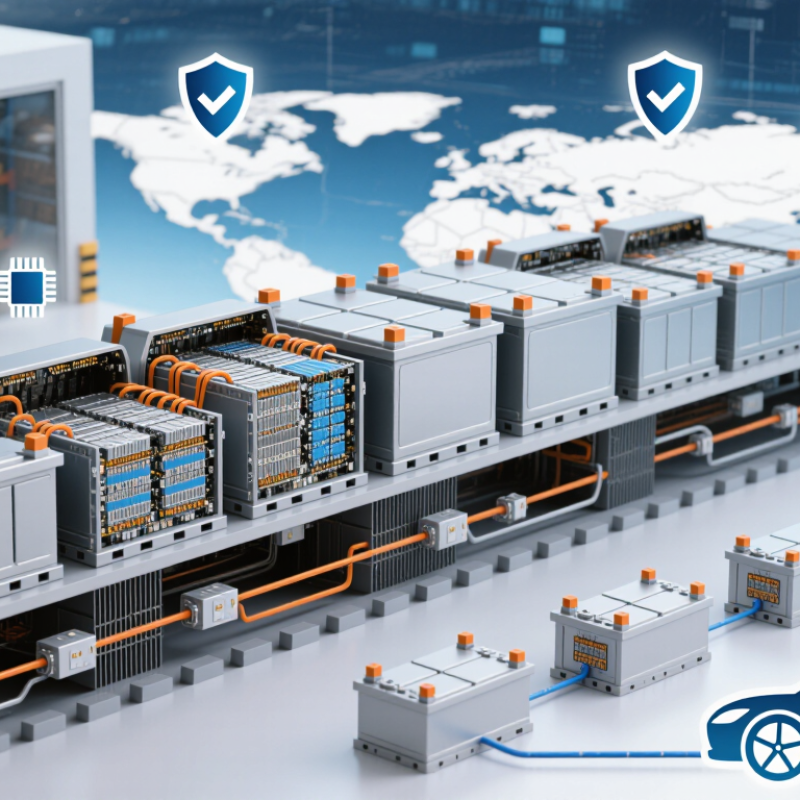
A competitive lithium-ion battery supplier offers more than a low quotation. Buyers need stable cells, clear test records, and predictable delivery. In procurement reviews, I look for traceability from raw materials to finished packs. Each batch should carry readable production codes and inspection results. Suppliers should explain capacity tolerance, cycle-life conditions, and thermal performance without vague promises. The details matter.
Engineering support is another strong advantage. A capable supplier can adjust voltage, enclosure size, connector design, and battery-management settings. It should also provide samples before mass production. Testing should cover overcharge protection, short-circuit response, vibration, humidity, and temperature changes. Safety comes first. Certification documents must be current and easy to verify. A neat presentation is not enough.
Cost still matters, but the cheapest offer may create expensive delays. I would compare warranty terms, replacement procedures, spare-part access, and communication speed. A supplier with local technical support can solve a failed pack faster than a distant sales office. Environmental practices also influence purchasing decisions, including material sourcing, energy use, and battery recycling guidance. No supplier gets everything right. A polished spreadsheet can hide weak field performance. Therefore, buyers should request pilot units, review independent test evidence, and speak with existing customers when possible. Reliable partnerships grow from measurable performance, not confident claims.
Which Battery Technologies and Applications Do Suppliers Offer?
In 2026, leading lithium-ion battery suppliers typically offer several cell chemistries, not one universal solution. Lithium iron phosphate cells prioritize thermal stability, long cycle life, and lower material costs. Nickel-rich cells provide higher energy density for electric vehicles and compact equipment. Lithium titanate cells charge quickly and perform well in cold conditions, but their energy density remains lower. Some suppliers also develop solid-state or sodium-ion alternatives, although availability and certification vary by region.
Their application portfolios often include electric cars, buses, forklifts, marine systems, solar storage, telecom backup, and medical equipment. A supplier may provide cylindrical, prismatic, or pouch cells, plus modules, battery management systems, and complete packs. Experienced buyers should review cycle testing, temperature limits, abuse testing, traceability, and field failure procedures. Ask for usable capacity, not only nameplate capacity. Warranty terms can hide important limits. Test data should reflect your duty cycle, charging speed, ambient temperature, and maintenance plan. Many comparisons remain incomplete here.
Tips:
Match chemistry to the workload. Choose LFP for frequent stationary cycling when weight matters less. Consider nickel-rich cells when range and compact packaging dominate. Require independent safety reports and production samples before signing a large contract. Check performance after months of partial charging. That detail matters. Recycling support and spare-part availability also deserve attention. Supplier claims may sound precise, yet real-world results can vary. Leave room for uncertainty.
How to Compare Suppliers by Quality, Capacity, Safety, and Cost?
2026 Best Lithium Ion Battery Suppliers Worldwide?
Choosing a lithium-ion battery supplier requires more than comparing quoted prices. Quality begins with cell consistency, traceable materials, stable assembly, and documented inspection records. Request recent capacity tests, cycle-life data, thermal-abuse results, and production samples. A supplier should explain how it controls batch variation. Ask for the actual test conditions. Numbers without context mislead. Small details matter.
Capacity should match both demand and operational reality. Review monthly output, expansion plans, equipment uptime, and lead times for cells, modules, and packs. A factory may advertise high annual capacity but reserve little for new customers. Verify this with purchase records, site evidence, or an independent audit. Safety deserves stricter scrutiny. Check battery-management functions, temperature monitoring, fault protection, transport documentation, and quality-system certification. Confirm whether tests apply to your exact design, not merely a similar model.
Cost comparison should include warranty terms, engineering changes, tooling, shipping, inspections, and replacement risk. The lowest quote can become expensive after one weak batch. Build a scorecard with weighted categories, then compare evidence line by line. Leave room for judgment. Supplier responses may be incomplete, and your forecast may be wrong. Recheck assumptions using a pilot order, incoming inspection, and field data. A transparent supplier admits limits and reports problems early. That behavior often matters more than polished sales material.
What Should Global Buyers Check Before Choosing a Supplier?
Choosing the best lithium-ion battery supplier in 2026 requires more than comparing quoted prices. Buyers should verify cell chemistry, usable capacity, cycle-life testing, and performance at low temperatures. The International Energy Agency reported that global electric-car battery demand exceeded 1 TWh in 2024. China represented about 75% of that demand. Scale matters, but it does not prove quality.
Ask for independent test reports, batch-level traceability, and clear warranty conditions. Check whether test methods match IEC 62619, UN 38.3, or relevant local standards. Certificate numbers, testing laboratories, and expiry dates should be confirmed directly. BloombergNEF reported an average lithium-ion battery-pack price of 115 dollars per kWh in 2024, down 20% from 2023. A low quotation may reflect different chemistry, thinner warranty coverage, or incomplete logistics costs.
Inspect production controls, not only sample cells. Review incoming-material checks, formation records, failure rates, and field-replacement procedures. A factory visit can reveal storage temperatures, moisture control, and labeling discipline. Ask how the supplier handles thermal events and recalls. Their answer should be documented, not improvised.
Be careful with impressive projections. Laboratory cycle life may not represent your vehicle, storage system, or climate. IEA data also shows that battery supply chains remain geographically concentrated, creating transport and continuity risks. I would not approve a supplier from one successful sample. Repeated third-party testing, transparent communication, and realistic delivery evidence provide stronger confidence. Some buyers still overlook after-sales support. That mistake becomes expensive after installation.





 Tina - International Sales Director