2026 Best Lithium Iron Phosphate Battery Options for Your Needs?
As the demand for renewable energy solutions surges, the Lithium Iron Phosphate Battery stands out in the energy storage sector. Current market research shows that the global lithium battery market is projected to reach $100 billion by 2026. This significant growth reflects the increasing reliance on sustainable and efficient power sources. Lithium Iron Phosphate Batteries, known for their safety and longevity, offer an efficient alternative to traditional lead-acid systems.
Manufacturers are focusing on enhancing the production of Lithium Iron Phosphate Batteries. Innovations in technology are paving the way for improved energy density and faster charging times. These batteries are ideal for various applications, from electric vehicles to renewable energy systems. However, some challenges remain. The manufacturing process can be resource-intensive, raising concerns about sustainability.
Trade events, like the 139th Canton Fair in 2026, will highlight advancements in battery technology. Features such as AI-driven supplier search will help businesses identify quality manufacturers. This adoption of smart technology in trade underscores the importance of sourcing reliable Lithium Iron Phosphate Batteries for a greener future. Ensuring quality while reducing environmental impact is a crucial reflection for the industry.

2026 Overview of Lithium Iron Phosphate Batteries
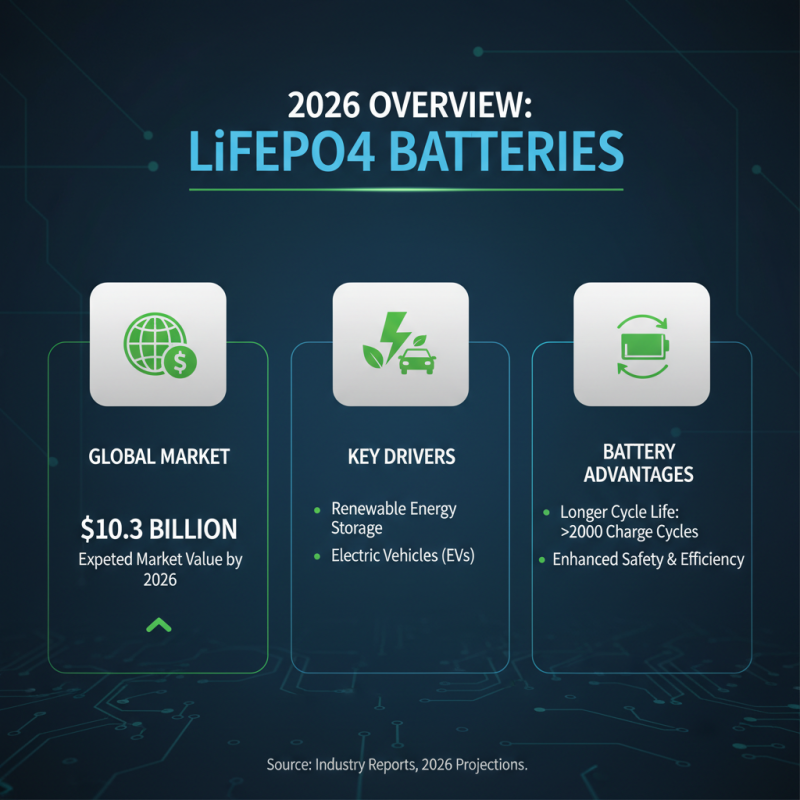
Lithium Iron Phosphate (LiFePO4) batteries are gaining popularity for their safety and efficiency. In 2026, their global market is expected to reach $10.3 billion, driven by growth in renewable energy and electric vehicles. These batteries offer a longer cycle life compared to traditional lithium-ion cells, often exceeding 2000 charge cycles. This longevity appeals to both consumers and industries.
However, despite their advantages, LiFePO4 batteries face challenges. Their energy density is lower than that of other lithium technologies, which may limit their use in space-constrained applications. There are also concerns regarding cost; they can be more expensive upfront, which affects consumer choices. As the market evolves, finding cost-effective production methods is crucial.
Additionally, environmental impact is a consideration. While LiFePO4 batteries are generally considered safer in terms of thermal runaway, the sourcing of lithium and phosphate needs scrutiny. Addressing sustainability in supply chains is imperative. Innovations in recycling methods are emerging, yet they're not widespread. Careful evaluation of these factors is essential as consumers look for the best options in 2026.
Key Features and Benefits of Lithium Iron Phosphate Technology
Lithium Iron Phosphate (LiFePO4) batteries are gaining attention for their stability and safety. This technology offers notable benefits, including lower risk of thermal runaway. Reports highlight that their operating temperature ranges from -20°C to 60°C. This versatility makes them suitable for various applications.
The energy density of LiFePO4 batteries typically reaches around 150 Wh/kg. While this is lower than other lithium technologies, their longevity compensates. They can last over 2000 charge cycles. This lifetime means fewer replacements, reducing long-term costs.
Moreover, these batteries provide excellent performance in high-discharge applications. They maintain stable voltage levels even under heavy loads. However, some users have reported issues with charging times, which can take longer compared to other lithium options. Efficiency can also be somewhat lower in cooler temperatures, prompting a need for improvement. Overall, their eco-friendliness and reliability cannot be overlooked.
Top Lithium Iron Phosphate Battery Brands to Consider in 2026
When exploring lithium iron phosphate batteries in 2026, several reputable brands stand out. The focus on safety and longevity is crucial. These batteries typically offer outstanding thermal stability, making them a popular choice for many applications. They are also known for a longer cycle life compared to traditional lithium-ion options. From electric vehicles to energy storage systems, these batteries are versatile and reliable.
However, not all options are equal. Some brands may excel in performance but lack scalability. Users should consider their specific needs. Battery size and weight can impact ease of installation or portability. Additionally, charging times can differ. Some models charge quickly, while others take longer. Researching independent reviews and user experiences is essential.
A common challenge is the cost. High-quality lithium iron phosphate batteries often come at a premium. While investing in these batteries is worthwhile for many, budget constraints remain a consideration. It’s essential to balance performance and cost. Re-evaluating one’s actual energy needs can lead to better purchasing decisions.
Factors to Evaluate When Choosing a Lithium Iron Phosphate Battery
When choosing a Lithium Iron Phosphate (LiFePO4) battery, several factors are crucial. Battery capacity is one important aspect. This determines how long your battery can run. A typical capacity range is from 100Ah to 300Ah, though larger options exist. Think about your energy needs carefully. Will you power a small device or an electric vehicle?
Another key factor is cycle life. These batteries usually offer 2000 to 3000 cycles. A higher cycle life can save you money in the long run. Longevity matters, especially if your application requires frequent charging and discharging. Weight can also influence your decision. LiFePO4 batteries are lighter compared to traditional lead-acid batteries.
**Tip:** Always check the specifications. Look for quality certifications, such as UL or CE. This ensures safety and reliability.
Finally, temperature tolerance can impact performance. These batteries operate efficiently in a broad temperature range, typically from -20°C to 60°C. However, extreme conditions can lead to reduced capacity. Consider your environmental conditions when selecting.
**Tip:** Regularly monitor battery health. Early detection of issues can prevent costly replacements.
2026 Best Lithium Iron Phosphate Battery Options
Applications and Use Cases for Lithium Iron Phosphate Batteries
Lithium Iron Phosphate (LiFePO4) batteries are gaining traction across various industries. Their stability and safety profile make them suitable for many applications. In 2021, the market for LiFePO4 batteries was valued at around $3 billion, projected to grow at a CAGR of 17% through 2026. This growth highlights increasing adoption in electric vehicles (EVs) and renewable energy storage.
In renewable energy, LiFePO4 batteries excel at storing solar and wind power. They are used in residential solar setups and larger grid storage solutions. The lifespan of these batteries often exceeds 2000 cycles, outperforming many alternatives. However, their energy density is lower than other lithium-ion batteries, which can limit their application in space-constrained environments.
In the electric vehicle sector, their thermal stability significantly reduces fire risks. However, some manufacturers note slower charging speeds compared to other chemistries. This can be a drawback for fast-paced urban environments. Many industries still seek the perfect balance between energy density and safety, leading to ongoing research and development efforts. Exploring new composite materials and configurations might enhance their viability.





 Tina - International Sales Director