How to Choose the Best Foya Solar Batteries for Your Energy Needs?
Choosing the right energy storage solution is crucial today. Foya Solar Batteries have gained attention for their efficiency and reliability. Industry expert Dr. Jane Smith states, "Foya Solar Batteries represent a significant advancement in sustainable energy storage." This highlights their importance in our energy landscape.
Understanding your specific needs can be challenging. Foya Solar Batteries come in various capacities and specifications. It’s essential to assess your energy consumption effectively. An inadequate choice might lead to performance issues, stranding you with insufficient power.
Consider factors like battery lifespan and charging cycles. These aspects influence the long-term value of Foya Solar Batteries. Buying the wrong type can lead to wasted resources. Reflect on your choices carefully. With the right guidance, you can select the optimal solution for your energy needs.
Understanding Solar Battery Basics and Types
Understanding solar battery basics is crucial for energy needs. Solar batteries store energy collected from solar panels. They provide backup power during outages and reduce energy costs. Two main types of solar batteries exist:
lead-acid and lithium-ion.
Lead-acid batteries are cheaper but offer shorter lifespans and efficiency, around 70-80%.
In contrast, lithium-ion batteries boast higher efficiency, often exceeding 90%, but at a higher cost.
Current industry reports highlight growing adoption of lithium-ion technology. According to a recent market analysis, the global solar battery market is projected to reach $25 billion by 2027. As households seek more energy independence, this trend continues. However, it's essential to consider installation costs and compatibility with existing systems. Many users find themselves overwhelmed by options and specifications.
A common mistake is underestimating energy storage needs. Some households may select a battery without calculating daily energy consumption. This oversight can lead to insufficient backup power during peak usage. It's vital to assess your unique energy needs carefully, ensuring you choose the right type and capacity. Quality and longevity are also important factors to consider. Research and comparisons can help clarify choices.
Assessing Your Energy Storage Requirements
When assessing your energy storage requirements, start by understanding your energy consumption. List devices and their power ratings. Calculate total wattage, including appliances, lights, and electronics. This analysis reveals your daily energy needs. It also helps you identify peak usage times.
Consider how long you want your batteries to last without recharge. A system designed for a few hours may not suffice for extended outages. Evaluate your lifestyle and energy use patterns. Maybe your devices run all day, or perhaps most activity occurs at night. This clarity aids in making better choices.
Don’t overlook the importance of future needs. Energy demands can change due to new devices or lifestyle shifts. Flexibility is key; ideally, select batteries that can be scaled up later. Also, reflect on your maintenance capacity. Some systems require constant monitoring, while others are more user-friendly. Balancing your immediate needs with future potential can be complex, but it is crucial for optimal energy storage solutions.
Evaluating Foya Solar Batteries Features and Specifications
When selecting solar batteries, understanding their features and specifications is crucial. Start by examining capacity, which indicates how much energy the battery can store. A larger capacity often means you can power more devices for a longer time. However, it's important to assess your actual energy needs first.
Overestimating requirements can lead to unnecessary costs.
Next, consider the discharge rate. This metric shows how quickly the battery releases energy. A high discharge rate is favorable for devices needing quick bursts of power.
Conversely, a slower discharge may suit applications with steady energy demands. Balance is essential here. If your usage patterns aren’t clear, it might lead to purchasing a battery that doesn’t quite meet your needs.
Lastly, look at the lifespan and warranty. Longer lifespan usually means better quality. Yet, don’t be swayed by numbers alone. Some batteries may have misleading specifications. A warranty gives insight into the manufacturer’s confidence in the product.
However, read the fine print. Understand what the warranty covers to avoid unpleasant surprises later.
Comparing Foya Solar Batteries with Competitors
When comparing solar batteries, several factors come into play. One crucial aspect is capacity. Look at how much energy each battery can store. Some batteries may offer more, while others could disappoint. Performance under various conditions is vital. Check whether the battery works efficiently in low sunlight.
Another point to consider is lifespan. Some may have longer warranties, but what does that truly mean? Batteries degrade over time. Don't overlook maintenance. Some require more care than others. Assess the cost-effectiveness as well. A cheaper battery might save money upfront but could lead to higher costs later.
The technology used in the batteries also differs. Some have advanced features, but others stick to basics. Watch for compatibility with your existing systems. Some products may promise much but fail to deliver in real-world applications. It's essential to gather user reviews and experiences before making a final decision.
Comparative Analysis of Solar Battery Capacity and Efficiency
Making the Purchase Decision and Installation Considerations
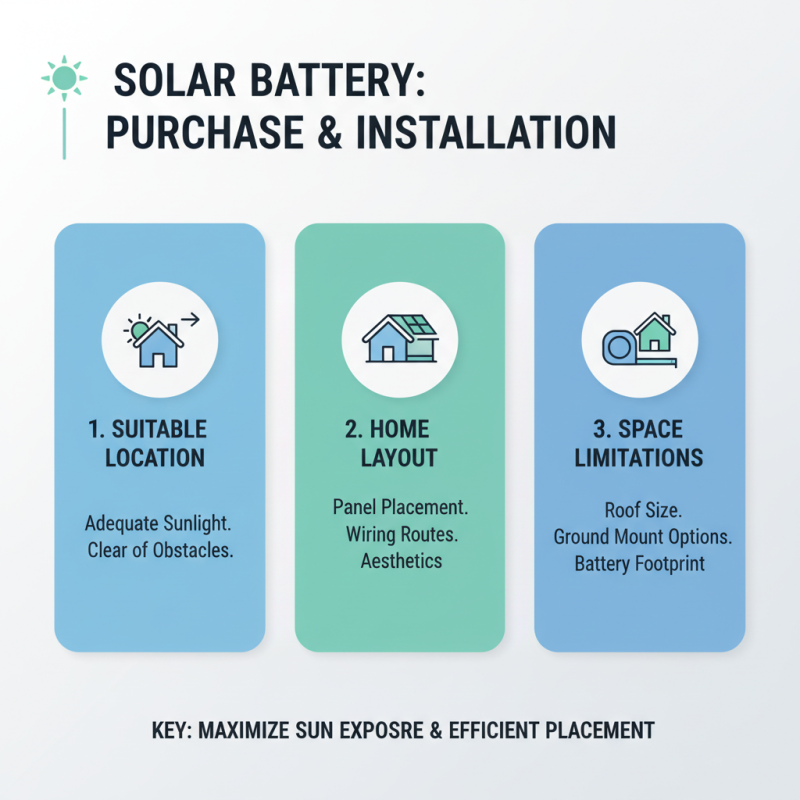
When choosing solar batteries, installation is key. You need a suitable location with adequate sunlight. Consider the layout of your home and where panels will go. Space may limit options. If your roof is small, this is critical.
Next, think about your energy needs. Calculate daily usage. Look at your appliances and devices. A simple estimate can reveal requirements. However, be aware this can change over time. New devices may increase demand.
Budget is another important factor. Quality batteries may cost more upfront but provide long-term savings. Explore financing options. Sometimes, cheaper choices lead to replacement issues later. Installation services can also vary. Ensure you understand all costs before committing. It can be easy to overlook these details.







 Tina - International Sales Director