Choosing the best 12v 10ah Lifepo4 battery requires more than comparing prices or advertised cycle counts. This compact battery can power fish finders, emergency lights, alarms, portable medical equipment, and small solar systems. Yet each application demands different performance. A battery running a steady 5-amp load behaves differently from one supplying short bursts. Check the device’s starting current, daily energy use, charging method, and available installation space. Small details matter.
Look for a clear datasheet, a tested battery management system, and reliable cell information. The BMS should provide protection against overcharging, deep discharge, excessive current, and overheating. Confirm the recommended charging voltage and whether charging below freezing is restricted. A strong warranty, traceable manufacturer, and responsive technical support also indicate better accountability. Independent test results are more useful than vague claims such as “lasts ten years.” Marketing can be polished. Specifications can still be incomplete.
In practical installations, users often discover that capacity falls when temperatures drop or wiring creates voltage loss. Leave room for safe ventilation and secure mounting. Do not select a battery only because it fits the compartment. Compare usable capacity, expected cycle life, recharge time, terminal design, and total ownership cost. No battery is perfect. Even careful buyers can overlook standby consumption. Reviewing the datasheet twice may prevent an expensive mismatch and produce a safer, more dependable power system.
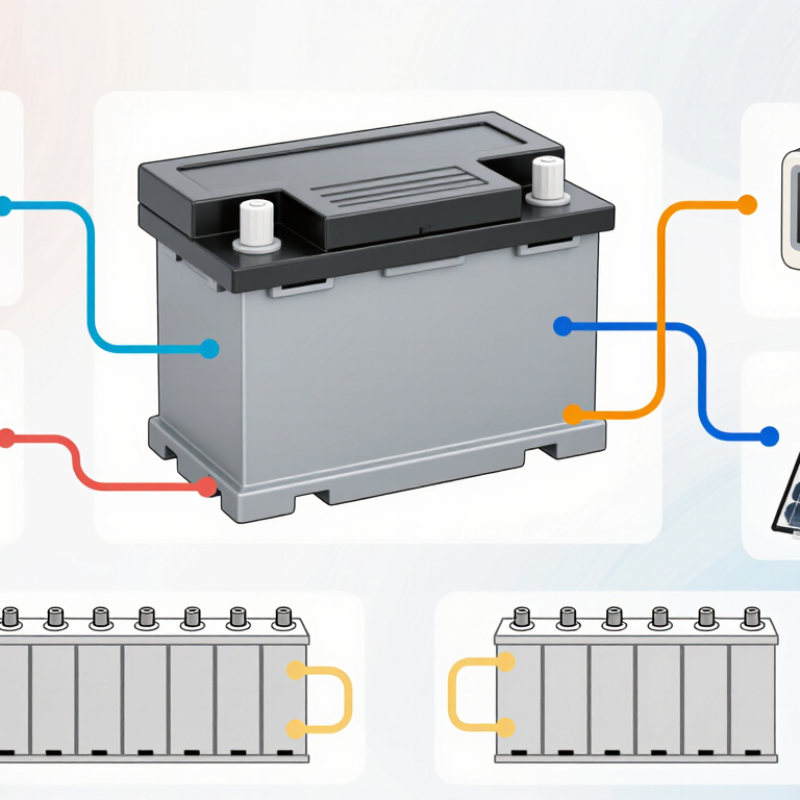
A 12V 10Ah LiFePO4 battery stores approximately 128 watt-hours.
Its nominal voltage is usually 12.8V, not exactly 12V. The calculation is simple: 12.8V × 10Ah = 128Wh In practical use, output depends on temperature, discharge current, wiring, and the battery management system (BMS). The BMS protects against overcharge, excessive discharge, short circuits, and abnormal temperature.
LiFePO4 uses lithium iron phosphate chemistry. It generally offers stronger thermal stability and longer service life than many older lithium chemistries. The IEA’s Global EV Outlook 2024 reported that LFP batteries represented about 40% of the global electric-car battery market in 2023. The report also noted that LFP packs were nearly 30% cheaper than nickel-based alternatives.
That scale does not guarantee every small battery performs equally well. A cheap label can still hide weak cells or poor testing. I have found that advertised cycle life often needs closer questioning. Test temperature, discharge depth, and current matter greatly.
Tips:
Check continuous current before buying. A 10Ah battery may run a 2A load for roughly five hours, but real runtime will be shorter. Confirm the recommended charging voltage, low-temperature cutoff, enclosure size, terminal type, and certification records. For outdoor equipment, inspect sealing and cable strain relief. Do not assume “12V” means universal compatibility; some chargers use unsuitable voltage profiles. Reference points include the IEA Global EV Outlook 2024 and applicable IEC 62619 or UL 1973 safety requirements.
When comparing 12V 10Ah LiFePO4 batteries, start with usable energy, not the label alone. Four cells normally create a 12.8V nominal pack. At 10Ah, that equals about 128Wh before operating limits. A battery management system may reserve capacity to protect the cells. Check the rated watt-hours, continuous discharge current, and peak current separately. A 10A load needs a battery and BMS designed for sustained 10A output. Short bursts can be very different.
Cycle life also needs careful reading. Test temperature, discharge depth, and charging speed can change the result sharply. The U.S. Department of Energy identifies operating conditions and degradation control as central factors in energy-storage performance. Meanwhile, BloombergNEF’s 2024 Battery Price Survey reported an average lithium-ion pack price of 115 dollars per kWh. Lower cost can be attractive, but weaker protection hardware may reduce practical value. Some specifications look impressive. Their test conditions may not.
Tips: Confirm the charging voltage, low-temperature charging protection, terminal type, enclosure rating, dimensions, and actual weight. If camping equipment draws 60W, the battery may run near two hours, after conversion losses. Measure your device’s real consumption first. I once trusted a printed runtime estimate and overlooked an inverter’s efficiency. That was not a clever mistake. Also request independent test records, warranty terms, and the manufacturer’s cycle-life conditions. A battery rated for 4,000 cycles at shallow discharge is not automatically a 4,000-cycle battery in daily use.
Matching battery capacity to your power requirements starts with watt-hours, not amp-hours alone. A typical 12V LiFePO4 battery provides about 12.8 volts nominally. Therefore, a 10Ah unit stores roughly 128Wh. This is the theoretical figure. Real use is lower.
The U.S. Department of Energy reports lithium-ion systems commonly achieve 85–95% round-trip efficiency. NREL’s Annual Technology Baseline also shows that usable capacity depends on efficiency, temperature, and operating limits. Using an 85% planning value gives approximately 109Wh. A 50W device could run for about 2.1 hours. A 10W LED system might operate for nearly 10 hours, excluding additional losses. Keep the calculation simple.
For inverter-powered equipment, allow another 10–15% loss. A 100W load may therefore consume around 115W from the battery. The estimated runtime becomes less than one hour. Check the appliance’s starting surge, because motors and compressors can briefly demand several times their rated power. The battery’s continuous and peak discharge ratings must support that demand.
In field testing, I would measure actual current with a meter instead of trusting the label alone. My first estimate is often too optimistic. Cold conditions can reduce available capacity, while charging below freezing may require protection. Select a capacity with practical reserve, perhaps 20–30% above the calculated need. A 12V 10Ah battery suits compact loads, but it is not automatically suitable for every 12V application.
When choosing a 12V 10Ah LiFePO4 battery, inspect its chemistry and protection system, not only its capacity label. Four LiFePO4 cells provide about 12.8V nominal voltage. A suitable charger normally reaches 14.2–14.6V using constant-current and constant-voltage control. The Battery University technical reference BU-205 reports that lithium iron phosphate can exceed 2,000 full cycles under controlled conditions. Real results depend on temperature, discharge depth, and charging limits. Marketing claims often ignore these variables.
Safety begins with the battery management system, or BMS. Look for overcharge, over-discharge, short-circuit, and temperature protection. UL 1973 testing requirements emphasize electrical, mechanical, and thermal safety for stationary battery systems. That does not make every battery automatically safe. Verify test documentation and the stated continuous current rating. For a 10Ah battery, a 2A charger equals 0.2C and is generally gentler than high-current charging. Charging below 0°C can damage lithium cells, so low-temperature cut-off matters. The U.S. Department of Energy’s energy-storage guidance also stresses thermal monitoring and validated protection controls.
Check the usable capacity with a measured load. A battery rated at 10Ah may deliver less in cold weather or at high current. I once treated capacity as the whole answer. That was a mistake. Wiring resistance, storage voltage, and idle drain can quietly reduce performance. A clear datasheet, traceable test method, and realistic cycle rating are stronger evidence than an impressive headline.
| Evaluation Dimension | Recommended Benchmark for a 12V 10Ah LiFePO4 Battery | Why It Matters | How to Verify It |
|---|---|---|---|
| Nominal Voltage and Energy | 12.8V nominal voltage; approximately 128Wh of rated energy | LiFePO4 cells have a nominal voltage of about 3.2V each. Four cells connected in series provide approximately 12.8V. | Check the specification sheet and confirm that rated energy is calculated as nominal voltage × rated capacity. |
| Usable Capacity | 10Ah rated capacity under the stated test conditions | Actual capacity can vary with discharge current, temperature, cutoff voltage, and battery age. | Review the capacity test current, end-of-discharge voltage, temperature, and test duration rather than relying only on the label. |
| Battery Management System | Protection against overcharge, over-discharge, overcurrent, short circuit, and excessive temperature | A BMS helps keep the cells within safe operating limits and can disconnect the battery during abnormal conditions. | Confirm the protection functions, cutoff thresholds, reset behavior, and continuous current rating in the technical documentation. |
| Continuous Discharge Current | Select according to the load; a 10A to 20A rating is common for compact 10Ah batteries | The current rating determines whether the battery can safely operate the intended equipment without excessive voltage drop or BMS shutdown. | Compare the load's continuous and peak current with the battery's continuous and peak discharge ratings. |
| Peak Discharge Capability | A clearly specified short-duration peak rating, typically higher than the continuous rating | Motors, pumps, inverters, and compressors may draw a high startup current for a short period. | Check the permitted peak current and duration. Do not treat a short-term peak rating as a continuous rating. |
| Recommended Charge Voltage | Usually about 14.2V to 14.6V for a 12.8V LiFePO4 battery, subject to the battery maker's specification | The correct voltage allows the cells to charge fully without exceeding the BMS or cell safety limits. | Use a charger specifically compatible with LiFePO4 chemistry and compare its output voltage with the battery specification. |
| Recommended Charge Current | About 0.2C to 0.5C for routine charging; approximately 2A to 5A for a 10Ah battery unless otherwise specified | Moderate charging reduces heat and stress while providing a practical charging time. | Calculate charge current as capacity × C-rate and verify the maximum permitted current in the manual. |
| Charging Time | Approximately 2 to 5 hours with a 5A to 2A charger, plus the final constant-voltage phase | Charging is not perfectly linear because current normally tapers near full charge. | Estimate time using capacity ÷ charge current, then allow extra time for the voltage-taper stage and charging losses. |
| Low-Temperature Charging | Charging below 0°C should be prohibited unless the battery has approved low-temperature protection or heating | Charging lithium batteries at freezing temperatures can cause lithium plating and permanent cell damage. | Confirm the low-temperature charge cutoff, sensor location, and whether an integrated heating system is present. |
| Operating Temperature | Typical ranges are approximately −20°C to 60°C for discharge and 0°C to 45°C for charging | Capacity, charging acceptance, and service life are affected by temperature. | Check the specified temperature range for both charging and discharging; these ranges are not interchangeable. |
| Cycle Life | At least 2,000 cycles to 80% of original capacity under defined test conditions | Cycle life indicates expected durability, but results depend on depth of discharge, temperature, charge rate, and end-of-life criteria. | Look for the test depth of discharge, current, temperature, and capacity-retention percentage behind the cycle-life claim. |
| Depth of Discharge | Regular use at approximately 80% depth of discharge is preferable to continuous 100% discharge when maximizing service life | Deeper and more frequent discharge generally places greater stress on the cells and reduces available reserve capacity. | Estimate daily energy demand and maintain a practical reserve instead of sizing the battery to the exact load. |
| Self-Discharge | Typically low, often around 2% to 3% per month under suitable storage conditions | Low self-discharge is useful for emergency equipment, seasonal devices, and backup applications. | Review the stated storage conditions and store the battery in a cool, dry location with periodic voltage checks. |
| Cell Balance | Consistent cell voltage balance during charging and discharging | Balanced cells improve usable capacity, reduce early BMS cutoffs, and help prevent one cell from reaching an unsafe voltage first. | Ask whether balancing is passive or active, when it operates, and whether cell-level monitoring is provided. |
| Enclosure and Terminals | Rigid enclosure, insulated terminals, secure fasteners, and protection against accidental short circuits | Mechanical protection reduces the risk of damage caused by vibration, impact, moisture, or installation errors. | Inspect terminal size, polarity markings, mounting points, enclosure material, and the stated environmental rating. |
| Weight and Size | A 12V 10Ah LiFePO4 battery commonly weighs several kilograms, depending on the enclosure, BMS, and construction | Weight affects portability, mounting, transport, and suitability for compact equipment. | Compare the published dimensions and weight with the available installation space and mounting requirements. |
| Charger Compatibility | Use a charger designed for LiFePO4 batteries; avoid lead-acid equalization or desulfation modes | Incorrect charging profiles can cause premature wear, BMS interruption, or unsafe overvoltage conditions. | Confirm chemistry compatibility, charge voltage, current limit, connector polarity, and automatic shutdown behavior. |
| Safety Documentation | Clear specifications, transport information, safety instructions, and applicable test or compliance documentation | Complete documentation makes it easier to assess installation risks, shipping requirements, and operating limits. | Request the datasheet, user manual, safety information, and relevant test reports before purchase. |
Note: The benchmarks above are general screening guidelines for a 12.8V 10Ah LiFePO4 battery. Always follow the specific battery manufacturer's operating limits, charging instructions, and safety documentation.
Choosing a 12V 10Ah LiFePO4 battery starts with the load, not the label.
Its nominal energy is about 128Wh at 12.8V. After conversion losses and a cautious depth of discharge, usable energy may be closer to 100Wh. Measure the device’s running current, startup surge, and daily operating hours.
A small pump may need high starting current, while a sensor system mainly needs stable, low-rate output.
IEA’s Global EV Outlook 2024 reports that LFP chemistry reached about 40% of the global electric-car battery market in 2023, showing its growing professional acceptance.
Check the battery management system carefully.
It should provide protection against overcharge, over-discharge, short circuits, and excessive temperature. Confirm the continuous and peak discharge ratings, because a 10Ah label does not guarantee strong surge performance.
Charging compatibility matters too. Use a charger designed for LiFePO4 cells, with suitable voltage and current limits. A charger intended for another chemistry may create unnecessary risk.
It sounds obvious, but field failures often begin with mismatched accessories.
Installation conditions can change the decision.
Review enclosure size, terminal position, vibration exposure, and expected ambient temperature. Cold charging can damage lithium cells, so low-temperature protection is valuable for outdoor equipment.
IRENA’s Electricity Storage and Renewables report identifies lithium-ion systems as dominant in modern storage because of efficiency and declining costs, but cost alone should not decide your purchase.
I would also request independent test records, cycle-life conditions, and safety certifications. Rated cycles can look impressive. The test temperature and discharge rate may tell a different story.