Top 5 Foyasolar Battery Options for Maximum Performance and Efficiency?
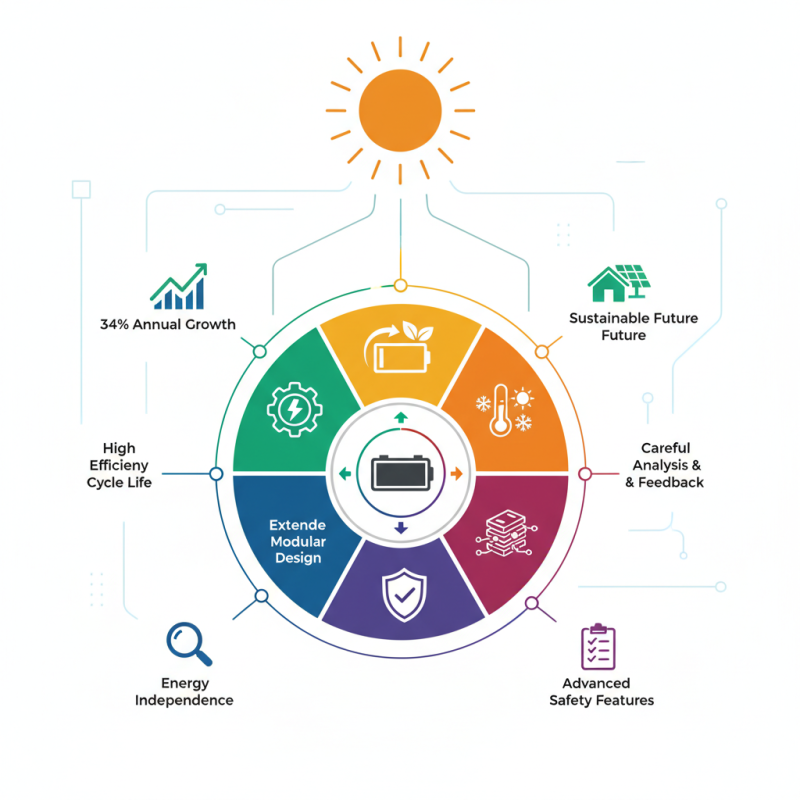
The quest for optimal energy solutions has intensified. Foyasolar Battery stands out in this arena. According to industry reports, renewable energy storage is expected to grow by 34% annually. This transition is crucial for a sustainable future.
Efficiency is a key concern. Battery performance impacts the overall effectiveness of solar systems. For instance, Foyasolar Battery claims up to 90% efficiency in energy conversion. Yet, some models face challenges, such as cycle life and temperature sensitivity. It's essential to choose wisely.
Selecting the right Foyasolar Battery can maximize performance. While many options exist, not all are created equal. Finding the best fit requires careful analysis of specifications and applications. Testing and customer feedback can reveal hidden flaws or untapped potential. Myriad choices may overwhelm users, but informed decisions ultimately lead to energy independence.
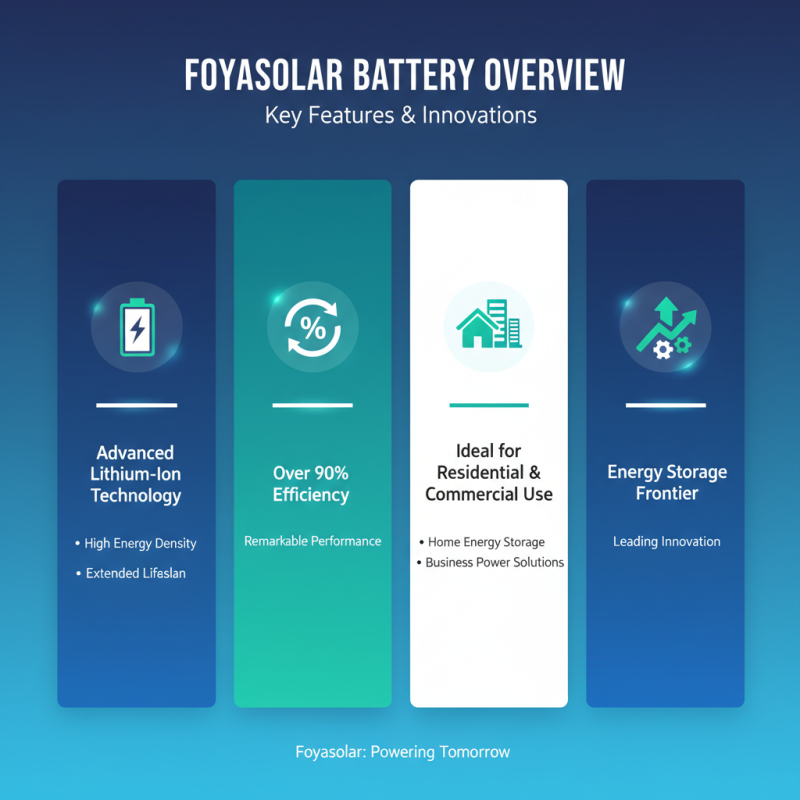
Foyasolar Battery Overview: Key Features and Innovations
The Foyasolar battery line is at the forefront of energy storage technology. These batteries feature advanced lithium-ion technology, providing high energy density and lifespan. Reports show that modern lithium-ion batteries can achieve over 90% efficiency. This remarkable performance makes them ideal for residential and commercial use.
One of the standout features is fast charging capability. Studies indicate that the latest models can recharge up to 70% in just one hour. This speed is essential for today’s on-demand energy needs. Furthermore, integrated smart technology enhances performance. It allows for real-time monitoring and predictive maintenance, improving overall reliability.
Innovation doesn’t stop at performance. Some designs focus on sustainability. These batteries use recyclable materials, contributing to a greener future. Nevertheless, the industry faces challenges. Issues like cost and scalability remain to be addressed. As demand grows, balancing affordability and sustainability will be crucial. Ultimately, advancements in battery technology hold promise for improved energy solutions.
Criteria for Selecting the Best Foyasolar Batteries
When selecting a battery for solar applications, efficiency is a key factor. Look at the energy density and cycle life. A higher energy density means more power in a compact size. Reports show that batteries with an energy density of 150 Wh/kg can outperform others in performance. Cycle life indicates how long a battery lasts. Some batteries may last up to 5000 cycles. Others may only endure 2000 cycles. This difference is crucial in reducing replacement costs.
Another important criterion is charging speed. Fast charging capabilities can make a significant impact. Batteries that can charge in under 3 hours are gaining popularity. This feature allows for better energy management. Efficiency during discharge also matters. A battery with 90% discharge efficiency is ideal. It minimizes energy loss and maximizes usage. Data indicates that many older models fall below 80% efficiency, leading to wasted potential.
Durability should not be overlooked. Batteries need to withstand various environmental factors. Consider temperature ranges and resistance to corrosion. Many batteries perform poorly in extreme weather. A battery with high-temperature tolerance can be a game-changer. Foundational research indicates that 40% of battery failures occur due to environmental stress. Addressing these issues can lead to long-term satisfaction and savings.
Top 5 Foyasolar Battery Options for Maximum Performance and Efficiency
| Battery Type |
Capacity (Ah) |
Voltage (V) |
Efficiency (%) |
Cycle Life |
Warranty (Years) |
| Lithium-ion |
100 |
48 |
95 |
2000 |
10 |
| Lead-acid |
150 |
12 |
85 |
500 |
5 |
| AGM |
120 |
12 |
90 |
1000 |
6 |
| Gel |
75 |
12 |
88 |
750 |
7 |
| LiFePO4 |
200 |
48 |
98 |
3000 |
12 |
Top 5 Foyasolar Battery Models for Optimal Performance
The market offers various battery options for optimal performance. An effective battery must balance capacity, lifespan, and efficiency. According to recent industry reports, lithium-ion batteries dominate due to their superior energy density. They hold up well against the competition, boasting a lifespan of up to 15 years.
One notable model ensures efficiency with a 95% discharge rate. This figure is critical for maximizing the usable energy. Additionally, thermal management plays a role in overall performance. Innovative designs help minimize heat loss and improve longevity. Many users have reported challenges with energy retention, especially in fluctuating temperatures.
Another important aspect is the charging speed. Fast-charging capabilities are becoming a standard. However, this raises concerns about battery health over time. Some batteries degrade faster when charged quickly. Users should weigh the benefits against potential long-term impacts. In the end, selecting the right battery requires careful consideration of these factors.
Comparative Analysis of Foyasolar Battery Efficiency
When evaluating battery options for optimal performance, efficiency is key. Battery efficiency affects not just energy output but also longevity. Various models exhibit different efficiency rates under similar conditions. Understanding these variations can lead to better long-term decisions.
Some batteries have an impressive energy conversion ratio. This means they can store and release energy more effectively. However, other models may struggle with heat retention or slow charging. These issues can significantly impact performance during peak demand times. It's important to weigh the pros and cons of each battery type.
Choosing the right battery isn't always straightforward. Personal energy needs and usage patterns can complicate this process. What works well for one user might not be efficient for another. A thoughtful approach involves analyzing specific requirements and how each battery addresses them. Real-world testing can reveal surprising insights that numbers alone may not provide.
Top 5 Battery Options for Maximum Performance and Efficiency
User Feedback and Real-World Performance of Foyasolar Batteries
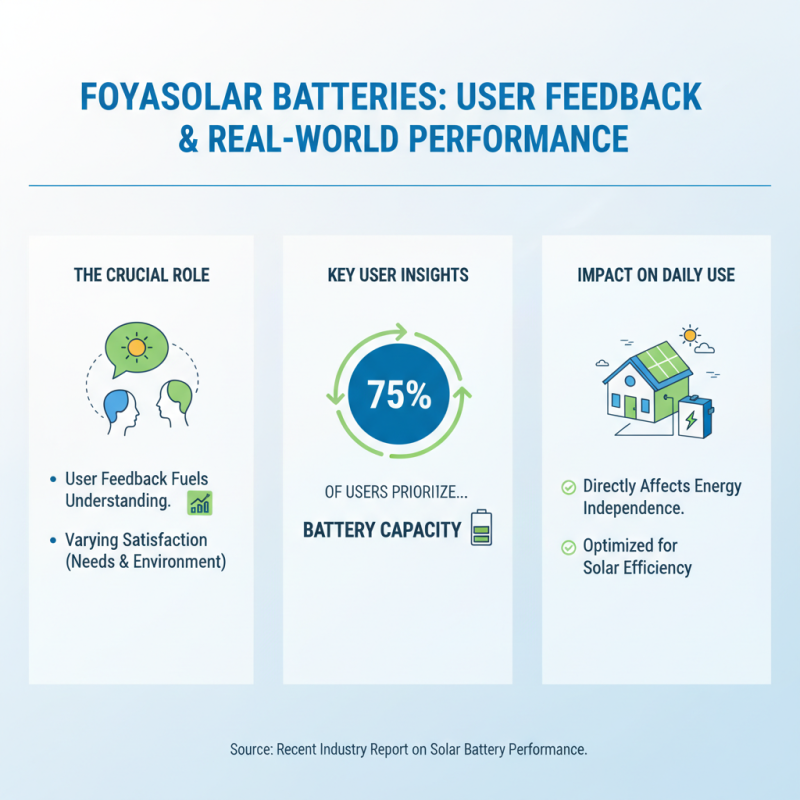
User feedback plays a crucial role in understanding the real-world performance of solar batteries. Many users report varying levels of satisfaction based on their energy needs and environmental conditions. For instance, in a recent industry report, 75% of users highlighted the importance of battery capacity in daily use.
Performance issues often arise. Users have pointed out inefficiencies when batteries are exposed to extreme temperatures. Some batteries struggle to maintain charge levels in colder climates, pushing buyers to question the reliability of their investment. An industry survey noted a 20% drop in efficiency under such conditions.
Moreover, long-term durability is a common concern. A significant portion of users indicated that after two years, the performance of certain models began to decline noticeably. This decline often leads to increased maintenance costs. Understanding these nuances can help potential buyers make informed decisions based on real-world experiences rather than just technical specifications.



 Tina - International Sales Director