2026 Top 25.6V LiFePO4 Battery Buying Guide
A 25.6v Lifepo4 Battery is often built around eight lithium iron phosphate cells in series, but its voltage label cannot tell you how well it will work in your system. Check the usable capacity, continuous discharge rating, battery management system protections, and charger compatibility. Then compare the battery’s dimensions with the actual installation space. A few millimeters can matter inside a crowded cabinet. Small details matter.
The market context is changing quickly. The International Energy Agency’s Batteries and Secure Energy Transitions report says global battery storage capacity in the power sector reached about 85 GW in 2023, and additions grew by roughly 60% that year. Its 2030 pathway is a scenario, not a guaranteed forecast: it calls for storage capacity to rise sixfold from 2023 levels. These figures describe the wider storage industry, not demand for 25.6-volt batteries specifically. Still, they underline why dependable specifications and system fit deserve careful attention.
This 2026 buying guide focuses on practical checks: real-world capacity, inverter limits, low-temperature charging guidance, warranty terms, and documented safety protections. Review manufacturer datasheets, not just product-page headlines. Compare cycle-life claims only when test conditions are stated. A high cycle count may assume a shallow discharge or controlled temperature. That is easy to miss. And even careful buyers can find that published figures do not answer every installation question. Ask for clarification before purchase, especially when charging settings or peak-current limits are unclear. The right choice is the battery that matches your equipment and daily load, not simply the one with the largest number on its label.
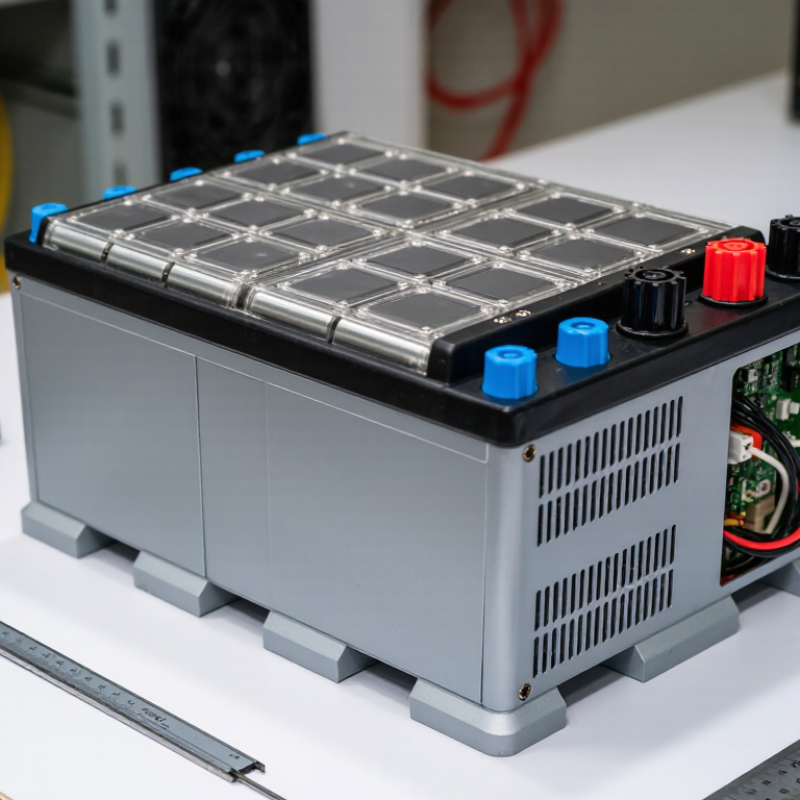
Understanding 25.6V LiFePO4 Battery Chemistry and System Basics
25.6V LiFePO4 packs typically connect eight lithium iron phosphate cells in series. Each cell has a nominal voltage near 3.2V, giving the pack its 25.6V rating. This is a nominal value, not a constant reading. During charging, voltage rises; near full charge, many systems approach 29.2V, subject to the battery’s specifications. Check the actual data sheet.
The chemistry is valued for stable operation and long cycle life under suitable conditions. Its voltage curve stays relatively flat through much of discharge, so a meter reading alone may not show remaining capacity accurately. That distinction matters. A battery management system monitors cell voltage and temperature, and can stop charging or discharging when limits are reached. It is protection, not a substitute for correct settings.
For energy estimates, multiply 25.6V by the rated amp-hours: a 100Ah pack stores about 2,560Wh nominally. Usable energy can be lower, depending on reserve settings, temperature, age, and load. A “24V” inverter may work, but its charging voltage and low-voltage cutoff must suit the pack. I would verify those numbers before installation; assuming every 24V device matches is an easy mistake. Cold-weather charging deserves special attention, since many LiFePO4 batteries restrict charging below freezing. Check the model-specific temperature limits. That’s the part people sometimes overlook.
Comparing Capacity, Power, Lifespan, and Other Key Specifications
A 25.6 V LiFePO4 battery is commonly built from eight cells in series, but voltage alone tells little about runtime. Compare capacity in amp-hours and watt-hours: a 100 Ah unit stores about 2,560 Wh nominally. Actual usable energy may be lower because of inverter losses, temperature, and the battery’s discharge limits. A fridge drawing 100 watts will not necessarily run for 25 hours.
Power matters just as much. Check the battery management system’s continuous current rating, not only a brief peak figure. For example, a 2,000-watt inverter may demand close to 80 amps at 25.6 volts, with extra current during startup. A battery rated for high capacity but modest output might struggle. Numbers can mislead. Confirm that the inverter, charger, and battery share compatible voltage and current ranges.
Cycle-life claims need context. Ask what depth of discharge and temperature were used for testing; those conditions change the result. In real use, frequent deep discharges and heat can shorten service life. Cold charging also deserves attention, since many batteries restrict charging below freezing. Check the details. Weight, dimensions, warranty terms, and clear protection settings can matter more than a small capacity advantage. I would compare the specification sheets carefully, though even that cannot predict every installation.
2026 Top 25.6V LiFePO₄ Battery Buying Guide
Compare nominal energy across common capacity options. Values are calculated at 25.6V nominal voltage.
How to compare: Nominal energy is calculated as voltage × amp-hours: for example, a 100Ah battery stores about 2.56kWh. Usable energy may be lower depending on the battery’s recommended depth of discharge and system losses. Power depends on the battery management system’s continuous discharge-current rating; at 25.6V, a 100A rating corresponds to about 2.56kW nominal output. LiFePO₄ cycle life varies with cell quality, temperature, charging practices, and depth of discharge; check the manufacturer’s test conditions and warranty rather than relying on a single cycle-life figure.
Identifying Compatible Applications and Charging Requirements
A 25.6V LiFePO4 battery is typically an eight-cell pack, but matching nominal voltage alone is not enough. Check the device’s voltage range, continuous current draw, and low-voltage cutoff. A small inverter may run at 24V, yet still reject a battery whose protection settings differ. Estimate capacity in watt-hours by multiplying 25.6 by the battery’s amp-hour rating. Then compare that figure with the load and expected runtime. Leave some margin; cold weather and aging can reduce usable energy. Fit matters.
Charging needs equal care. Many eight-cell packs specify a 29.2V maximum charge voltage, based on 3.65V per cell, but the battery maker’s limits take priority. Use a charger with a LiFePO4 charging profile and compatible voltage and current settings. Avoid lead-acid equalization modes unless the battery documentation explicitly permits them. Charging below freezing can damage some cells, so check for low-temperature protection and the stated operating range. It is easy to assume every 24V charger is suitable. That assumption deserves a second look.
Tips: Read the battery and charger manuals together. Confirm connector polarity, charge-current limits, and inverter cutoff settings before installation. For an off-grid shed, for example, check the inverter’s startup surge against the battery’s discharge rating—not just its average load. Keep the specifications nearby; guessing is not a test method.
Evaluating the Top 25.6V LiFePO4 Battery Options for 2026
A 25.6V LiFePO4 battery typically uses eight cells in series, but matching the voltage alone is not enough. Compare usable capacity, continuous discharge current, and the battery management system’s protection features. For a camper or small off-grid setup, check whether the battery can handle the inverter’s startup surge, not just its steady draw. Small details matter.
When evaluating options for 2026, confirm charging compatibility with your existing charger and inspect the stated low-temperature charging limits. A built-in cutoff can help prevent charging in unsuitable cold conditions, but the exact threshold varies. Check the case dimensions, terminal position, and weight against your installation space. Also review the warranty terms and whether cycle-life figures specify depth of discharge and test conditions. A polished specification sheet can still leave gaps; ask for clarification rather than assuming every rating applies to your setup.
Tips: List your usual loads and estimate daily energy use before choosing capacity. Compare real operating needs, not just the largest number on a product page. Check the manual. If two batteries appear similar, installation details and support may make the practical difference.
2026 Top 25.6V LiFePO4 Battery Buying Guide — Evaluating Capacity-Based Options
| Capacity Option |
Nominal Voltage |
Nominal Energy |
Illustrative Energy at 80% Depth of Discharge |
Potential Applications |
Key Selection Checks |
| 50 Ah |
25.6 V |
1,280 Wh (1.28 kWh) |
1,024 Wh (1.02 kWh) |
Compact backup systems, small DC loads, and portable power setups |
Confirm the battery’s continuous discharge rating supports the connected load and inverter surge requirements. |
| 100 Ah |
25.6 V |
2,560 Wh (2.56 kWh) |
2,048 Wh (2.05 kWh) |
Medium-sized backup loads, small off-grid systems, and recreational-vehicle electrical systems |
Check charger compatibility, BMS current limits, and whether the battery supports the intended charging temperature. |
| 150 Ah |
25.6 V |
3,840 Wh (3.84 kWh) |
3,072 Wh (3.07 kWh) |
Longer-duration backup, larger DC loads, and moderate off-grid storage |
Verify that the BMS continuous and peak current ratings match the load profile; capacity alone does not establish power capability. |
| 200 Ah |
25.6 V |
5,120 Wh (5.12 kWh) |
4,096 Wh (4.10 kWh) |
Higher-capacity backup systems, larger recreational-vehicle setups, and residential or cabin storage |
Check installation space, battery weight, cable and fuse requirements, and the manufacturer’s rules for parallel connection. |
| 300 Ah |
25.6 V |
7,680 Wh (7.68 kWh) |
6,144 Wh (6.14 kWh) |
Extended backup duration and larger off-grid systems where a single high-capacity battery is suitable |
Confirm system-level current limits, approved charging settings, thermal-management requirements, and service access. |
|
Reading this comparison: These are anonymous, capacity-based configurations, not ranked product listings. Nominal energy is calculated as 25.6 V × rated amp-hours. The 80% figures are planning estimates calculated from nominal energy and are not a guaranteed usable-energy rating; actual usable energy depends on the battery’s specifications, operating conditions, and system losses. A typical 25.6 V LiFePO4 battery uses eight cells in series (8S); 3.2 V per cell is nominal, and 29.2 V corresponds to 3.65 V per cell. Use the battery manufacturer’s specified charging profile and verify compatibility with the charger, inverter, BMS, and intended installation.
|
Selecting and Maintaining the Right Battery for Your Needs
Choosing a 25.6V LiFePO4 battery starts with the load, not the label. A 25.6V pack usually contains eight cells rated at 3.2V nominal each. Multiply voltage by amp-hours to estimate stored energy: a 100Ah battery holds about 2,560Wh before usable-capacity limits and conversion losses. List the devices you will run, their wattage, and daily operating hours. Then check the battery’s continuous and peak discharge ratings against motor starts, pumps, or inverters. A large capacity cannot compensate for an undersized battery management system.
Chemistry adoption is growing, but application fit still matters. The International Energy Agency’s Global EV Outlook 2024 reports that LFP batteries supplied about 40% of the global electric-car battery market in 2023. That figure reflects vehicle demand, not a guarantee that every LFP battery suits every off-grid or backup setup. Check the charger’s voltage profile, low-temperature charging limits, terminal layout, and enclosure dimensions. I would measure the compartment twice; even a few millimeters can spoil an otherwise sound purchase.
Tips: Leave capacity headroom for aging and cold-weather performance. Keep the battery within its specified temperature range, use a compatible charger, and inspect terminals for looseness or corrosion. Record charge levels and unusual voltage drops. Small checks help. Revisit your estimates after a month; real usage is often messier than the spreadsheet.






 Tina - International Sales Director