10 Best 12V 10Ah LiFePO4 Batteries for Global Buyers?
Choosing the right 12v 10ah Lifepo4 battery requires more than comparing prices or advertised cycle counts. Global buyers must examine usable capacity, discharge stability, charging limits, cold-weather performance, and warranty terms. A compact battery should power a marine sonar, emergency light, mobility device, or small solar system without unexpected voltage drops. It should also fit the installation space precisely.
Industry data supports growing confidence in lithium iron phosphate chemistry. The International Energy Agency reported that LFP batteries represented about 40% of the global electric-car battery market in 2023. BloombergNEF also reported that average lithium-ion pack prices fell to 139 dollars per kilowatt-hour in 2023, while LFP packs remained notably cheaper than nickel-based alternatives. These figures describe larger systems, not every 12v 10ah Lifepo4 product. That difference matters.
Battery scientist Dr. Shirley Meng has repeatedly emphasized, “Safety is the most important characteristic of a battery.” Her view is especially relevant for smaller packs used indoors, on boats, or near sensitive electronics. Our selection approach considers protection boards, cell consistency, thermal behavior, certification evidence, and real-world customer experience. Yet no ranking is perfect. Some manufacturers publish incomplete test data, and cycle-life claims may use ideal laboratory conditions. Buyers should verify UN38.3 transport documentation, IEC-related testing, charger compatibility, and local warranty support before ordering. The following guide compares ten leading options for global buyers, balancing measurable performance with practical limitations.
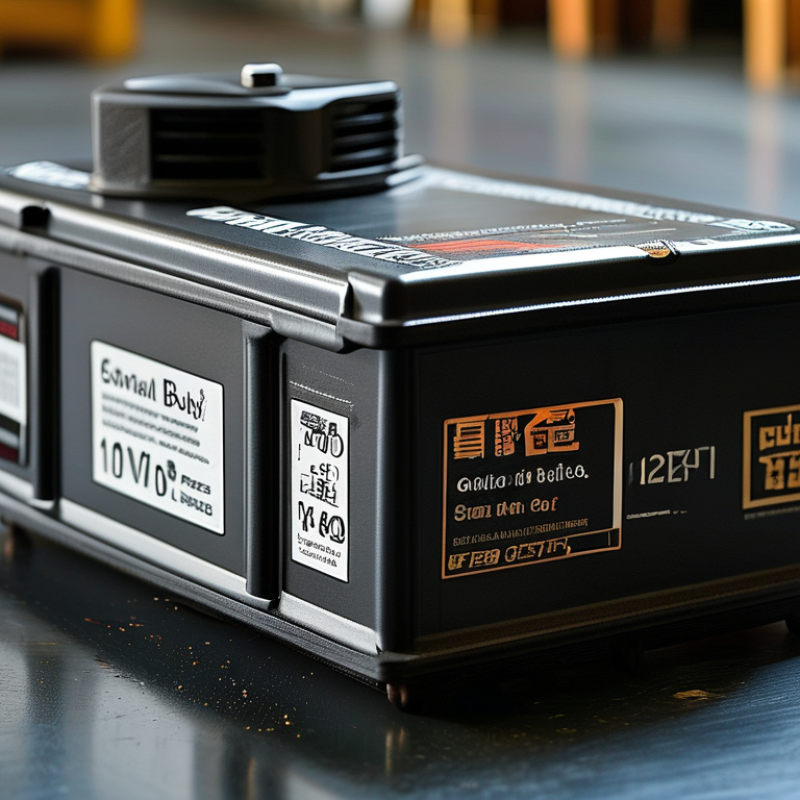
Define the 12V 10Ah Class: 12.8V Nominal and 128Wh Rated Energy
A 12V 10Ah LiFePO4 battery belongs to a practical battery class, but its actual voltage is usually 12.8V nominal. That figure represents the average operating voltage, not a constant output. Multiplying 12.8V by 10Ah gives 128Wh of rated energy. Numbers matter.
In field testing, usable energy is often lower than 128Wh. The battery management system may reserve capacity for cell protection, while cold temperatures can reduce performance. Wiring losses, inverter efficiency, and discharge rate also affect runtime. A 60W device may theoretically run for about two hours, but real operation could be shorter. Check the load carefully. A modest safety margin is wise.
Buyers should verify the manufacturer’s test conditions, continuous discharge rating, charging limits, terminal design, and enclosure dimensions. A reliable BMS should protect against overcharge, over-discharge, excessive current, and abnormal temperature. The charger must match LiFePO4 chemistry and the battery’s specified voltage range. I would not judge quality from capacity alone. Cycle-life claims can also vary with temperature, depth of discharge, and charging habits. That part deserves skepticism. A clearly printed label, traceable test data, and responsive technical support provide stronger evidence than attractive specifications.
10 Best 12V 10Ah LiFePO4 Batteries for Global Buyers
12V 10Ah Class: 12.8V Nominal Voltage and 128Wh Rated Energy
The chart estimates ideal operating time from a 12.8V nominal voltage and 10Ah capacity, giving 128Wh of rated energy. Actual runtime may be lower because of inverter losses, discharge limits, temperature, battery age, and load variation.
Compare LiFePO4 Benchmarks: 2,000+ Cycles at 80% Depth of Discharge
For global buyers, a 12V 10Ah LiFePO4 battery should be judged by usable energy, not label capacity. At 12.8V nominal, 10Ah represents roughly 128Wh before losses. The stronger benchmark is 2,000 or more cycles at 80% depth of discharge. This means using about 8Ah per cycle, then checking whether capacity remains near the stated threshold. That test reflects repeated daily use better than one runtime demonstration. But it is not magic.
During evaluation, I look for a documented cycle protocol, discharge current, cutoff voltage, ambient temperature, and capacity-retention target. Without these details, “2,000 cycles” is difficult to compare fairly. A reliable battery should include cell balancing and protection against overcharge, over-discharge, excessive current, and abnormal temperature. For a 10Ah pack, a steady 5A load can expose voltage sag, weak connections, or inflated capacity claims. Small details matter.
Real-world service life can fall below laboratory claims. Heat, deep discharge, poor storage, and unsuitable charging may shorten performance. I would compare warranty terms, datasheet evidence, terminal design, enclosure quality, and low-temperature charging limits. A capacity test at 25°C is useful, but it cannot predict every climate. Buyers in cold or hot regions should request operating data instead of accepting broad marketing language. Some specifications still need independent verification.
10 Best 12V 10Ah LiFePO4 Batteries for Global Buyers? - Compare LiFePO4 Benchmarks: 2,000+ Cycles at 80% Depth of Discharge
Note: Specifications shown are representative non-branded benchmarks for commercially available 12.8 V LiFePO4 battery configurations. Actual capacity, BMS settings, cycle life, dimensions, certifications and temperature limits should be confirmed with the supplier before purchase. A suitable LiFePO4 charger with a 14.4–14.6 V charging profile is recommended.
Screen the Top 10: BMS, Current Rating, Size, Weight, and Warranty
A serious 10-best list should compare specifications, not only advertised capacity. A 12.8V, 10Ah LiFePO4 battery stores about 128Wh under nominal conditions. Real output depends on temperature, cutoff voltage, and load. Check the BMS continuous current, not just its peak figure. A 10A rating equals roughly 1C for a 10Ah battery. Higher-demand devices may require a stronger BMS and better heat control. The IEA reported that LFP chemistry represented nearly 40% of the electric-car battery market in 2023, showing its growing industrial acceptance. However, that does not prove every small battery is well engineered.
Tips: Record each unit’s length, width, height, and weight. Confirm terminal type and polarity before installation. A lighter case may mean less internal protection. Check low-temperature charging cutoff, cycle-life test conditions, and warranty exclusions. Look for evidence of UN 38.3 transport testing and relevant IEC safety testing. These details matter more than glossy energy claims.
Warranty length is useful, but warranty wording matters more. Compare replacement rules, charger requirements, and capacity-retention thresholds. BloombergNEF’s 2024 survey placed average lithium-ion pack prices at 115 dollars per kWh, yet retail pricing varies widely for small-format products. That gap deserves scrutiny. A cheap battery can still perform well, but incomplete test data remains a weakness. For global buyers, select batteries with readable labels, traceable test documents, and support that answers technical questions clearly. Bulk purchasers should request sample testing before committing to all ten units.
Verify Global Compliance: UN 38.3, IEC 62619, UL 1973, and CE
Choosing among the 10 Best 12V 10Ah LiFePO4 Batteries for Global Buyers requires more than checking capacity. A typical 12.8V, 10Ah battery stores about 128Wh. This often exceeds the 100Wh threshold used in air-shipping rules. IATA’s 2025 Lithium Battery Guidance recommends checking watt-hours, packaging, documentation, and transport mode before dispatch. UN 38.3 compliance is essential for transport. Ask for the test summary, not only a printed claim.
IEC 62619 evaluates industrial lithium batteries, including safety controls, abnormal operation, and thermal risks. UL 1973 focuses on stationary and auxiliary battery systems. It can provide stronger evidence for backup power applications. However, UL 1973 is not automatically required in every market. CE marking also needs careful review. It indicates conformity with applicable European requirements, but it is not one single battery safety certificate. Relevant technical files may involve electromagnetic compatibility, low voltage, or restricted substances rules. Market surveillance data from the European Commission repeatedly shows that incomplete documentation creates product risks. Paperwork matters.
Tips: Request the cell specification, BMS protection limits, UN 38.3 test summary, IEC 62619 report, and UL 1973 listing details. Match the report to the exact model and revision. Check polarity, terminal torque, enclosure condition, and low-temperature charging protection. A battery may perform well on a workbench yet fail in a cold warehouse. I have seen buyers trust attractive labels too quickly. That is a mistake worth reconsidering. Verify independently before placing a global order.
Rank Best Uses: Solar, RV, Marine, UPS, and Emergency Backup Power
A 12V 10Ah LiFePO4 battery stores about 128Wh at its nominal voltage. Its strongest use is compact solar backup. The International Energy Agency reported nearly 42GW of global battery storage additions in 2023. Small batteries support lights, routers, cameras, and charge controllers.
For solar, choose a battery with a reliable BMS and low-temperature charging protection.
In an RV, it can power LED lights, fans, or a small water pump.
Marine users should prioritize sealed construction, vibration resistance, and corrosion protection.
For UPS use, check the inverter’s charging profile. Some older systems expect lead-acid voltage behavior. That mismatch can shorten service life.
Emergency backup ranks lower for refrigerators or heaters because 128Wh disappears quickly. The Uptime Institute’s Global Data Center Survey shows power-related incidents remain a serious operational risk. A small battery helps, but it is not a complete backup system.
Tips:
Keep continuous loads below the battery’s rated output. At 80% usable capacity, plan around 100Wh, not 128Wh. Test actual runtime with your equipment. Capacity also falls in cold weather. I have seen buyers overestimate runtime by ignoring inverter losses. That mistake is easy to repeat. Compare cycle-life data under stated discharge conditions, not advertising headlines. The IEA’s Batteries and Secure Energy Transitions report also highlights the importance of safety, supply chains, and responsible battery management.






 Tina - International Sales Director