How to Choose the Right Foya Solar Battery for Your Energy Needs?
Choosing the right energy storage solution is crucial in today’s sustainability-focused world. The Foya Solar Battery stands out in this landscape. It offers reliable performance for various energy needs. However, selecting the perfect model can be challenging.
Understanding your personal requirements is essential. Do you need backup power during outages? Or are you looking for a system to enhance your solar setup? Each scenario demands different specifications. Many users struggle with capacity options and discharge rates. The Foya Solar Battery has several variations; knowing the best fit for your situation is vital.
Expert insights suggest evaluating usage patterns. Consider your daily energy consumption and peak demands. Take note of warranties and customer service experiences. An informed decision leads to enhanced efficiency and satisfaction with your Foya Solar Battery. Always reflect on your choices to ensure long-term success and reliability.
Understanding Your Energy Requirements for Solar Battery Selection
Understanding your energy requirements is crucial when selecting a solar battery. Determining your daily energy consumption sets the foundation for an effective choice. According to the U.S. Energy Information Administration, the average household uses about 30 kilowatt-hours (kWh) per day. However, this number can drastically vary based on individual habits and usage patterns. You might find that understanding your high-consumption moments helps to optimize storage needs.
Next, consider the battery capacity you require. A typical solar battery ranges from 5 kWh to 15 kWh. If your household primarily depends on electricity for heating or cooling during peak hours, a larger capacity would be necessary. Data shows that homes with energy-efficient appliances can reduce their total daily consumption by up to 25%. Assessing device usage, such as refrigerators and HVAC systems, helps tailor your battery selection.
You might also reflect on future energy needs. If you plan to add solar panels or expand your energy use, anticipate higher demands. Considering your current and future energy requirements can lead to a more effective solution. Research indicates that homeowners should maintain a flexible approach, as energy needs can evolve. Balancing efficiency with capacity is key. Aim for a thoughtful consideration of your habits and anticipated changes.
Battery Capacity Comparison for Solar Energy Storage
This chart illustrates the usable capacity of different solar battery options. As the capacity increases, the usable energy capacity also rises. Understanding these values can help you select the right battery based on your energy needs.
Key Features of Foya Solar Batteries to Consider
When selecting a solar battery, key features play a crucial role in meeting energy needs effectively. One major consideration is the capacity of the battery. Capacity, measured in kilowatt-hours (kWh), indicates how much energy the battery can store. A higher capacity allows for more energy storage for larger homes or systems. Conversely, smaller batteries suit compact spaces or minimal energy requirements.
Another important factor is the depth of discharge (DoD). DoD measures how much of the battery's capacity can be safely used. A battery with a high DoD can deliver more usable energy without degrading over time. Efficiency ratings also matter. They determine how effectively the battery converts solar energy to stored energy. Higher efficiency means more energy use and less waste.
Finally, warranty and lifespan are crucial. A longer warranty often signifies reliability. A battery that lasts longer reduces the need for replacements. It is essential to assess your unique needs and available space as you reflect on these features. Proper research into these aspects ensures you choose a battery that truly complements your energy lifestyle.
Evaluating Battery Capacity and Output for Your Usage
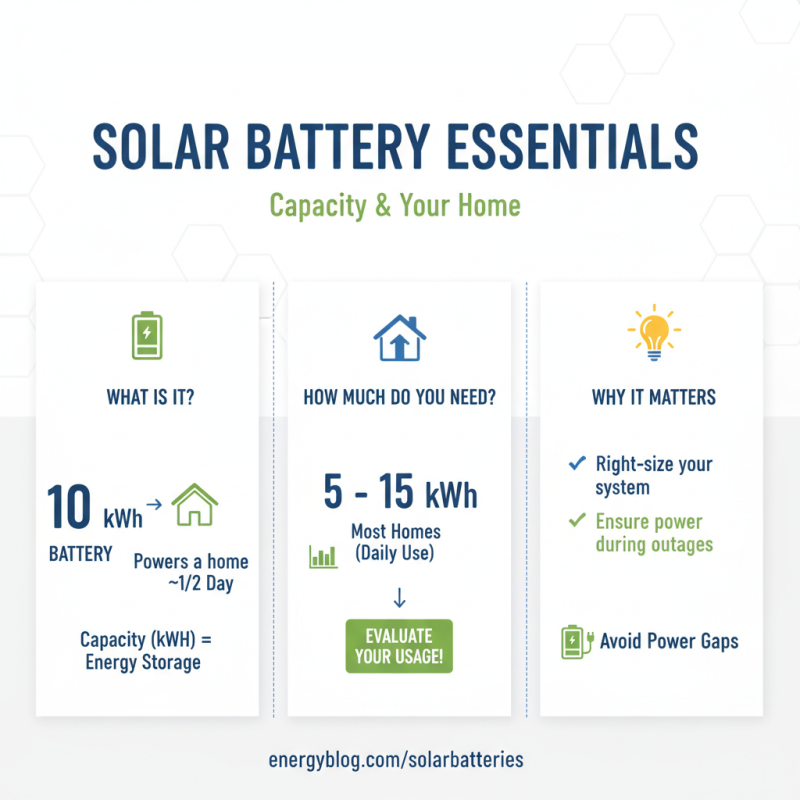
When choosing a solar battery, understanding battery capacity is crucial. Battery capacity, measured in kilowatt-hours (kWh), indicates how much energy the battery can store. For example, a 10 kWh battery can power a typical home for about half a day. Industry reports suggest that most homes require a capacity of 5 to 15 kWh, depending on energy consumption patterns. Evaluating your daily energy usage helps in selecting the appropriate capacity.
Consider your peak usage times. If your household consumes 30 kWh per day, a 10 kWh battery won't suffice. It may require multiple batteries or a larger option to meet your needs. Efficiency ratings also play a significant role. A battery with an efficiency rating of 90% means 90% of stored energy is usable. This efficiency impacts long-term cost savings. Many homeowners overlook this detail, leading to inadequate energy supply.
Finally, think about output levels, measured in watts. This number shows how much energy the battery can deliver at once. For appliances that draw high wattage, like air conditioners, a higher output is essential. Some batteries struggle to deliver enough power, especially during peak demands. Detailed research, including consulting energy professionals, helps ensure the right fit for your unique energy requirements.
Assessing Compatibility with Your Solar System
When choosing the right solar battery, compatibility with your existing solar system is crucial. Assessing the voltage and capacity of your solar setup should be your first step. If your solar panels generate 48 volts, your battery needs to match that. Mismatched voltages can lead to inefficiencies and potential damage to your system.
You also need to consider the storage capacity. How much energy do you require daily? Estimating your energy usage can help you pick a battery that meets those needs. A battery with a capacity that’s too low may leave you without power during critical times.
Next, examine the battery chemistry. Lithium-ion batteries have become popular due to their efficiency and longevity. However, they tend to have a higher initial cost. In contrast, lead-acid batteries are cheaper upfront but come with shorter lifespans. Balancing your budget and long-term needs is essential. Reflecting on these factors will ensure you choose a compatible and effective solar battery solution for your home.
How to Choose the Right Foya Solar Battery for Your Energy Needs?
| Battery Model |
Capacity (Wh) |
Compatible Voltage (V) |
Cycle Life (Cycles) |
Warranty (Years) |
Ideal Use Cases |
| Model A |
10,000 |
48 |
2000 |
5 |
Residential and Off-grid |
| Model B |
8,000 |
24 |
3000 |
7 |
RV and Portable |
| Model C |
12,000 |
48 |
3000 |
10 |
Commercial and Backup |
| Model D |
6,000 |
12 |
1500 |
3 |
Small Off-grid Systems |
Budgeting for Your Foya Solar Battery Purchase and Installation
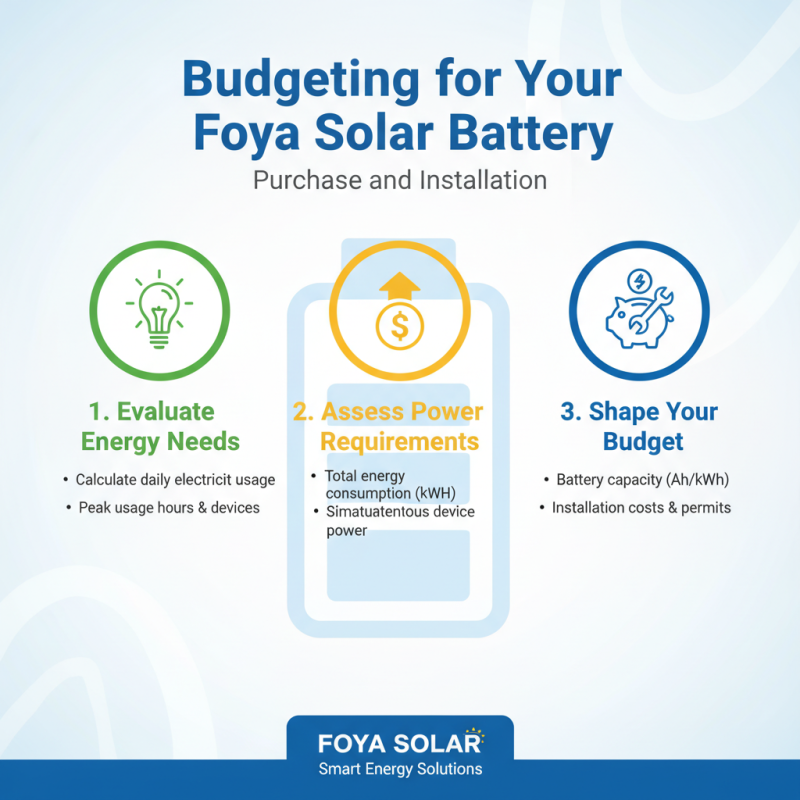
Budgeting for a Foya solar battery is essential. Start by evaluating your energy needs. Calculate your daily electricity usage. Consider factors like peak usage hours and the devices you want to power. This assessment shapes your budget.
Next, explore options for installation. Labor costs can vary significantly. Hiring experienced professionals may cost more, but it ensures safety and efficiency. Some might attempt DIY installation to cut costs. However, this can lead to mistakes and higher long-term expenses.
Finally, think about maintenance. A battery system requires periodic checks. Budget for these ongoing costs too. It may seem daunting now, but careful planning can save money in the future. Investing time in researching and budgeting helps ensure your solar battery meets your needs efficiently.





 Tina - International Sales Director