Leave Your Message

China Top 12V 10Ah LiFePO4 Battery Manufacturers

A 12V 10Ah LiFePO4 battery may look modest on a specification sheet. In practice, its value depends on more than voltage and capacity. Cell quality, battery-management protection, usable energy, cycle-life testing, and consistent manufacturing all matter. A compact battery powering a fish finder or emergency light still needs dependable performance.

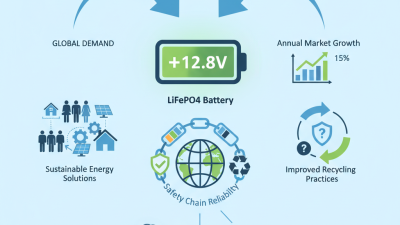
The International Energy Agency reported that global battery demand in the energy sector grew by 40% in 2023, reaching about 750 GWh. Most demand came from electric vehicles, so this figure does not measure the small 12-volt battery market directly. It does, however, show how quickly battery supply chains are expanding. The IEA also highlights cost, durability, and supply-chain resilience as important industry concerns.

Battery scientist Dr. Y. Shirley Meng’s published work emphasizes the need to assess batteries through measurable performance and materials science, rather than headline claims alone. That is useful guidance when comparing manufacturers. Buyers should check whether cycle-life figures state test conditions, whether protection features are documented, and whether capacity claims are supported by test data. A label is not a laboratory report.

This guide introduces China-based manufacturers offering 12V 10Ah LiFePO4 products. It considers product specifications, testing transparency, manufacturing capability, and communication with buyers. The comparison is a starting point, not an endorsement. Supplier details and product ranges can change, and public information may be incomplete. Verify current specifications before placing an order.

China Top 12V 10Ah LiFePO4 Battery Manufacturers

What Is a 12V 10Ah LiFePO4 Battery?

What Is a 12V 10Ah LiFePO4 Battery?

A 12V 10Ah LiFePO4 battery is a rechargeable lithium iron phosphate battery rated for roughly 12.8 volts nominally and 10 amp-hours of capacity. That equals about 128 watt-hours: enough, in theory, to run a 10-watt light for around 12 hours. Real runtime is usually shorter because conversion losses, temperature, and the device’s power demand matter. The arithmetic is simple. The usage is not.

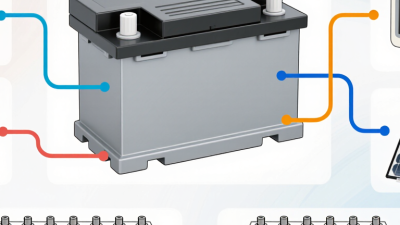
Inside, four cells, each with a nominal voltage near 3.2V, are commonly connected in series. A battery management system helps monitor cell voltage, current, and temperature, and can protect against operating conditions outside its limits. The chemistry is valued for stability and long service life, but actual performance depends on cell quality, charging settings, and use. Battery University’s technical overview of lithium iron phosphate describes cycle life reaching thousands of cycles under suitable conditions; this is not a guarantee for every 10Ah pack. A small battery can still be strained by a motor’s startup surge. Check the manufacturer’s continuous and peak current ratings, not just the amp-hour figure.

At 128Wh, this size suits compact loads such as emergency lighting, portable instruments, or small electronics. It may replace a lead-acid battery in some applications, but charging compatibility must be checked. Cold conditions can also limit charging, even when the battery appears to have charge available. That detail is easy to overlook.
What Is a 12V 10Ah LiFePO₄ Battery?

A typical “12V” LiFePO₄ battery uses four cells in series, giving a nominal voltage of 12.8V. At 10Ah, its nominal energy is 128Wh (12.8V × 10Ah). For comparison, a 12V, 10Ah lead-acid battery has 120Wh of nominal energy (12V × 10Ah). Actual usable energy depends on the battery and operating conditions.

Key Criteria for Evaluating Chinese Battery Manufacturers

For a 12V 10Ah LiFePO4 battery, evaluate more than the headline capacity. Ask manufacturers for a current datasheet showing nominal voltage, usable capacity, continuous discharge current, charging limits, and operating temperature. A stated 10Ah rating means little without the test conditions. Request test results at a defined current and temperature, then check whether the figures match your application.

Cell consistency and battery management are practical checkpoints. Ask how incoming cells are matched and what the BMS protects against, including overcharge, over-discharge, and excessive current. Request sample inspection records, cycle-test conditions, and traceable production batches. Look closely. Clear answers matter. Vague claims about “long life” are not evidence.

Assess quality control through concrete documents and a factory audit, if available. Check whether the manufacturer can share inspection procedures, warranty terms, and safe packing and transport instructions. Compare response times, but do not treat fast replies as proof of quality. A missed detail can happen, even in a capable factory; ask follow-up questions and record the answers before ordering.

China Top 12V 10Ah LiFePO4 Battery Manufacturers – Key Criteria for Evaluating Chinese Battery Manufacturers

Use this comparison framework to assess suppliers of 12V-class, 10Ah LiFePO4 batteries. Values below are reference points or verification criteria—not product specifications or claims about any particular manufacturer.

Evaluation Dimension Relevant Reference or Check What to Request or Verify Why It Matters
Nominal voltage and energy A common 4-cell LiFePO4 configuration has a nominal voltage of 12.8V. At 10Ah, nominal energy is approximately 128Wh (12.8V × 10Ah). Confirm cell count, nominal voltage, rated capacity, and the discharge conditions used for the capacity rating. Prevents comparisons between batteries rated under different voltage or test conditions.
Capacity test conditions Capacity depends on factors such as discharge current, temperature, and cut-off voltage. Request a capacity test report stating test temperature, discharge rate, end-of-discharge voltage, and sample size. A stated 10Ah capacity is meaningful only when its test method and conditions are clear.
Battery management system (BMS) A 4-cell lithium battery pack commonly uses protection against overcharge, over-discharge, overcurrent, and short circuit; temperature protection may also be provided. Request the BMS specification, protection thresholds, continuous and peak current limits, and details of any balancing function. The BMS affects safety, usable current, and compatibility with the intended charger and load.
Cell and pack traceability Cell manufacturer, model, production lot, and pack assembly records should be identifiable and consistent with supplied documentation. Ask for cell datasheets, lot traceability procedures, incoming inspection records, and pack-level test records. Traceability supports quality investigations and helps confirm that samples and production units use the specified components.
Transport compliance UN Manual of Tests and Criteria, subsection 38.3, contains transport tests applicable to lithium batteries. Verify the UN 38.3 test summary for the exact battery type and configuration being offered. Check that model identifiers match the product documents. Transport documentation is important for shipping lithium batteries and should correspond to the actual product.
Product safety evidence IEC 62619 addresses safety requirements for secondary lithium cells and batteries used in industrial applications. Applicability depends on the product and end use. Request test reports or certificates from a qualified laboratory, and verify scope, model coverage, issuing body, and report validity. A standard reference alone does not establish that a specific battery model has been tested or certified.
Charging requirements LiFePO4 charging limits are product-specific; charging voltage, current, and temperature limits should be specified by the battery supplier. Obtain the approved charging profile, charger compatibility requirements, and any restrictions on charging at low temperatures. Using an unsuitable charger or operating outside stated limits can affect safety and service life.
Operating temperature Charge and discharge temperature limits can differ and vary by battery design. Request separate charging and discharging temperature ranges, plus any BMS cut-off or recovery conditions. Separate limits help determine whether the battery suits the real operating environment.
Cycle-life claim Cycle life depends on test conditions, including depth of discharge, current, temperature, and end-of-life capacity threshold. Ask for the full cycle-life test method and report, including the capacity-retention threshold used to define end of life. Cycle-life figures cannot be compared reliably when test conditions or end-of-life definitions differ.
Dimensions, weight, and terminals These are product-specific and should be stated in a controlled datasheet or drawing. Confirm pack dimensions, tolerances, weight, terminal type and polarity, mounting details, and connector options. Physical compatibility is essential for installation and electrical integration.
Quality management and production controls Evaluate documented inspection and production-control processes; management-system certification should be checked for scope and validity. Review relevant certificates, audit scope, incoming and final inspection procedures, nonconformance handling, and change-control practices. Documented controls help assess consistency between approved samples and repeat production.
Warranty and after-sales support Warranty terms are supplier-specific and should clearly define coverage, exclusions, and claim procedures. Request the written warranty, service response process, spare-part policy, and procedures for handling failed or returned units. Clear terms reduce uncertainty over product support and responsibility after delivery.

Leading China-Based 12V 10Ah LiFePO4 Battery Manufacturers

China’s 12V 10Ah LiFePO4 battery manufacturers serve compact backup, mobility, and monitoring applications. Their products typically combine four cells, a battery-management system, and a protective enclosure. Buyers should check continuous discharge current, low-temperature charging protection, cycle-life test conditions, and terminal dimensions. A 10Ah label alone says little about real performance.

The International Energy Agency’s Global EV Outlook 2024 reports that worldwide battery demand exceeded 750 GWh in 2023, rising about 40% year over year. That figure covers the wider battery market, not this specific 12V format, but it shows why supplier quality controls matter. Ask manufacturers for capacity-test records, cell traceability, and sample results at the intended discharge rate. Check the fine print.

A practical evaluation also includes charging voltage, standby drain, and performance after storage. Request a sample and test it with the actual charger and load; a bench result may not match field use. Certifications and factory audits can support due diligence, but they do not replace product-level verification. Even careful buyers can overlook connector fit or wiring resistance. Manufacturers that explain test methods clearly are easier to assess than those offering only impressive cycle-life claims.

How to Compare Product Quality, Safety, and Certifications

For a 12V 10Ah LiFePO4 battery, compare measured performance—not just the label. Ask for capacity test results, including discharge current, temperature, and cutoff voltage. A “10Ah” rating without these conditions is hard to evaluate. Check whether the battery management system protects against overcharge, deep discharge, short circuits, and excessive temperature. Small details matter: a clear wiring diagram and labeled terminals can prevent installation mistakes.

Safety documents need careful reading. IEC 62619 covers safety requirements for industrial lithium batteries, while UN 38.3 addresses transport testing; neither automatically proves every claim about a finished battery. Confirm that reports identify the exact model and test configuration.

The IEA’s Global EV Outlook 2024 reports that LFP batteries made up about 40% of the global electric car battery market in 2023. That figure shows the chemistry’s growing use, but it does not verify a specific 12V product. Ask for traceable test reports and check certificate scope with the issuing body. I would still compare warranty terms and real-world operating limits; paperwork alone can look reassuring.

How to Select the Right Manufacturer for Your Application

Choosing a 12V 10Ah LiFePO4 battery manufacturer starts with the job the battery must do. A small monitoring unit may need steady output for hours, while a portable device may face frequent charging and vibration. Share your load profile, operating temperature, enclosure limits, and expected cycle frequency. Clear details help suppliers recommend suitable cells and protection circuitry. Guessing here can lead to a battery that fits the case but misses the runtime.

Ask for test records, not broad claims. Check rated capacity, charge and discharge limits, low-temperature behavior, and battery management system protections. A practical sample test matters: measure runtime with your actual device, then inspect connector fit and case temperature. Small differences count. Confirm that production units will match the approved sample, and ask how changes are controlled. Paperwork helps, but it does not replace consistent testing.

Also examine communication and traceability. Can the manufacturer identify cell batches and explain how defects are handled? Request written warranty terms, lead times, and packaging details. A fast reply is useful, though not proof of quality. I would leave room for uncertainty: supplier data may not reflect a cramped enclosure or a cold workshop. Validate the battery under real conditions before committing to a large order.