What is a Lithium Ion Battery and How Does it Work?
Lithium ion batteries, or "Batterie Lithium Ion," play a crucial role in our daily lives. They power everything from smartphones to electric vehicles. Understanding how they work can enhance our appreciation of modern technology. These batteries are known for their lightweight and high energy density.
At their core, lithium ion batteries operate on the movement of lithium ions between two electrodes: the anode and cathode. This movement creates an electric current. Over time, however, these batteries face challenges. Degradation can occur due to the chemical processes inside. Users may notice a decline in performance over time.
This article aims to delve deeper into the intricacies of lithium ion technology. It will explore practical applications and potential limitations. Understanding these elements is vital for responsible usage and future innovations. With this knowledge, we can reflect on our reliance on these powerful energy sources.
Understanding Lithium Ion Batteries: An Overview
Lithium-ion batteries are crucial in modern technology. They power everything from smartphones to electric vehicles. Understanding how they work helps appreciate their role in our daily lives.
These batteries store energy using lithium ions. When charged, ions move from the positive electrode to the negative one. This movement generates electric power. When discharged, ions flow back. This cycle is efficient, yet it is not without flaws. Over time, battery capacity may diminish. Heat generation during use can lead to safety concerns.
Improper handling can cause problems, too. Users often underestimate the importance of temperature control and charging habits. These aspects can affect battery longevity. Awareness of these factors encourages better maintenance practices. Understanding lithium-ion batteries is essential for responsible usage.
Components of a Lithium Ion Battery and Their Functions
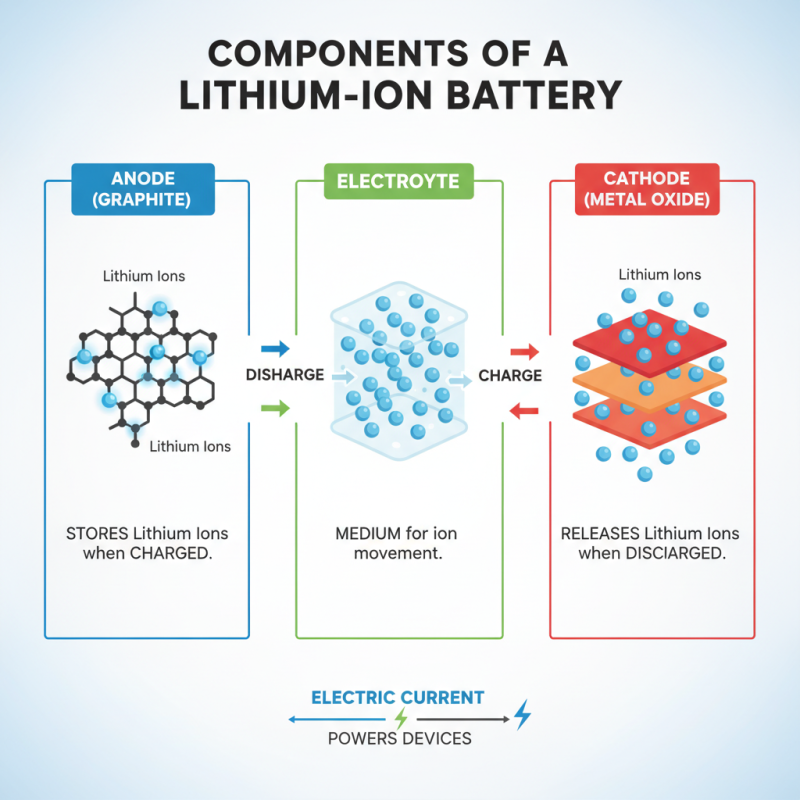
A lithium-ion battery consists of several key components that work together to store and release energy efficiently. The main parts include the anode, cathode, and electrolyte. Each plays a crucial role in the battery's performance. The anode, typically made of graphite, stores lithium ions when the battery is charged. During discharge, these ions move to the cathode, which is often composed of lithium metal oxide. This movement generates a flow of electric current, powering devices.
The electrolyte is another vital component. It permits the flow of ions between the anode and cathode but prevents direct contact between them. This prevents short circuits, but it has its challenges. The electrolyte must be stable and non-flammable to ensure safety. Many formulations exist, and some can degrade over time, affecting battery life and performance.
A battery's separator is also essential. This thin layer keeps the anode and cathode apart, ensuring safety during operation. However, separators can wear out with repeated charging cycles. Balancing performance, longevity, and safety requires ongoing research and improvement. Each part's efficiency impacts overall functioning, highlighting how advancements can make lithium-ion batteries more reliable, sustainable, and powerful.
The Electrochemical Process: How Lithium Ion Batteries Generate Power
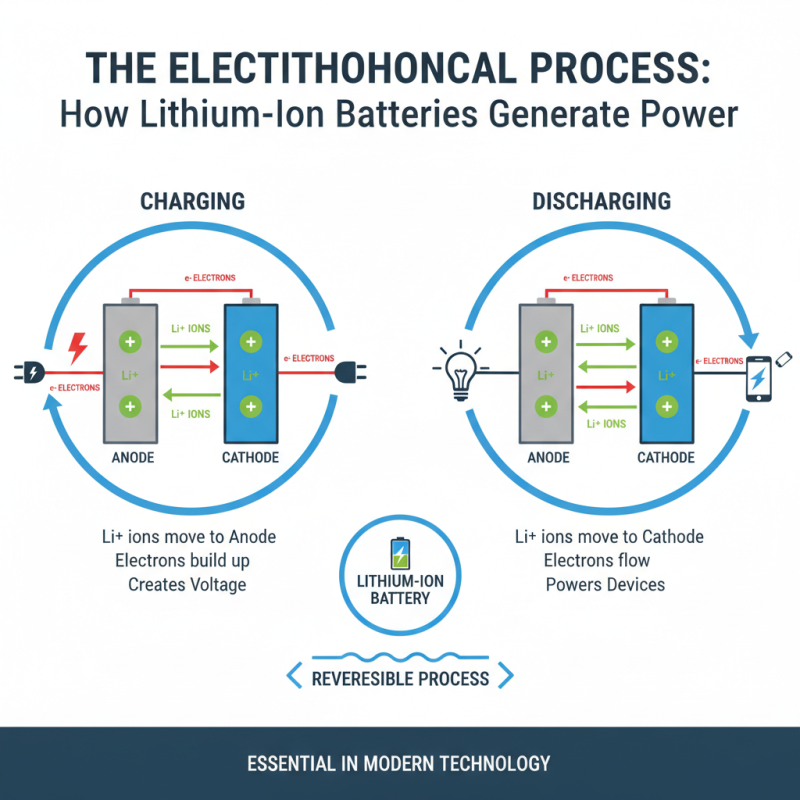
Lithium-ion batteries are essential in modern technology. Their power generation relies on an electrochemical process. Within the battery, lithium ions move between anode and cathode during charging and discharging. When charging, lithium ions flow to the anode, causing electrons to build up. This creates a potential difference, or voltage.
During discharge, the process reverses. Lithium ions travel back to the cathode. Electrons flow through an external circuit, powering devices like smartphones and laptops. This flow is crucial for device performance. However, the efficiency can decline over time. Factors such as temperature and charge cycles affect performance.
Understanding this process shows the complexity of lithium-ion batteries. They are not flawless, as degradation occurs. As technology advances, researchers strive to enhance longevity and efficiency. Challenges remain, but the electrochemical process is fundamental to battery design. Assessing improvements will help optimize energy storage solutions.
Charging and Discharging Mechanisms in Lithium Ion Batteries
Lithium-ion batteries are essential for modern technology. Understanding their charging and discharging mechanisms is crucial. When a lithium-ion battery charges, lithium ions move from the cathode to the anode. This flow occurs through the electrolyte, storing energy. During discharging, the process reverses. Lithium ions flow back to the cathode, releasing energy for devices to use.
Battery efficiency affects performance. Research shows that lithium-ion batteries operate best between 20°C to 25°C. Extreme temperatures can reduce lifespan and efficiency. Regularly monitoring battery health is advisable. For instance, each cycle diminishes capacity. Data indicates a 20% reduction in energy retention after 500 cycles. A careful approach could prolong battery life.
Tips: Avoid fully draining the battery. Keeping it between 20% and 80% can sustain longevity. Consider utilizing smart chargers designed to optimize charging speeds. Small adjustments can lead to significant improvements over time.
What is a Lithium Ion Battery and How Does it Work?
| Parameter |
Value |
| Typical Voltage |
3.7 V |
| Energy Density |
150-200 Wh/kg |
| Charge Cycles |
500-1500 cycles |
| Self-discharge Rate |
5% per month |
| Temperature Range |
-20°C to 60°C |
| Typical Lifespan |
2-3 years |
Applications and Advantages of Lithium Ion Battery Technology
Lithium-ion batteries are becoming increasingly relevant in today’s world. They deliver energy for consumer electronics, electric vehicles, and renewable energy storage. Their versatility is one of the main advantages. A compact size allows them to fit into various devices, from smartphones to large-scale energy solutions. This adaptability makes them a popular choice across industries.
The efficiency of lithium-ion batteries is impressive. They can hold large amounts of energy relative to their weight. This is crucial for electric vehicles, which rely on efficient energy sources to compete with traditional fuel. Additionally, they have a longer lifespan compared to many other battery types. However, the production process can be environmentally demanding. This raises questions about sustainability and responsible sourcing of materials.
Charging speeds for these batteries are rapid, often taking less than an hour for many devices. This convenience appeals to consumers and industries alike. Nevertheless, safety concerns exist. Overcharging or exposure to extreme temperatures can lead to battery failure. These risks remind us to focus on better safety practices in battery usage. The importance of research and development cannot be overstated in addressing these challenges.




 Tina - International Sales Director