Leave Your Message

Top 10 Benefits of Lithium Iron Phosphate Battery Technology?

In the ever-evolving landscape of battery technology, the Lithium Iron Phosphate Battery stands out. Renowned industry expert Dr. Emily Carter notes, "Lithium Iron Phosphate Batteries offer unparalleled safety and longevity." These batteries have gained prominence due to their exceptional thermal stability and environmental friendliness.

Lithium Iron Phosphate Batteries are reshaping energy storage solutions. Their ability to deliver powerful performance without compromising safety is a game changer. In addition, they are less prone to overheating compared to other lithium-based batteries. As a result, this technology appeals to various sectors, from electric vehicles to renewable energy systems.

However, challenges remain. The initial cost of Lithium Iron Phosphate Batteries can be higher than alternatives. Additionally, their energy density is not as high as some other lithium-ion batteries. These factors require careful consideration for potential users. Despite these challenges, the benefits of this technology are increasingly recognized in the drive for sustainable energy solutions.

Top 10 Benefits of Lithium Iron Phosphate Battery Technology?

Overview of Lithium Iron Phosphate Battery Technology

Top 10 Benefits of Lithium Iron Phosphate Battery Technology?

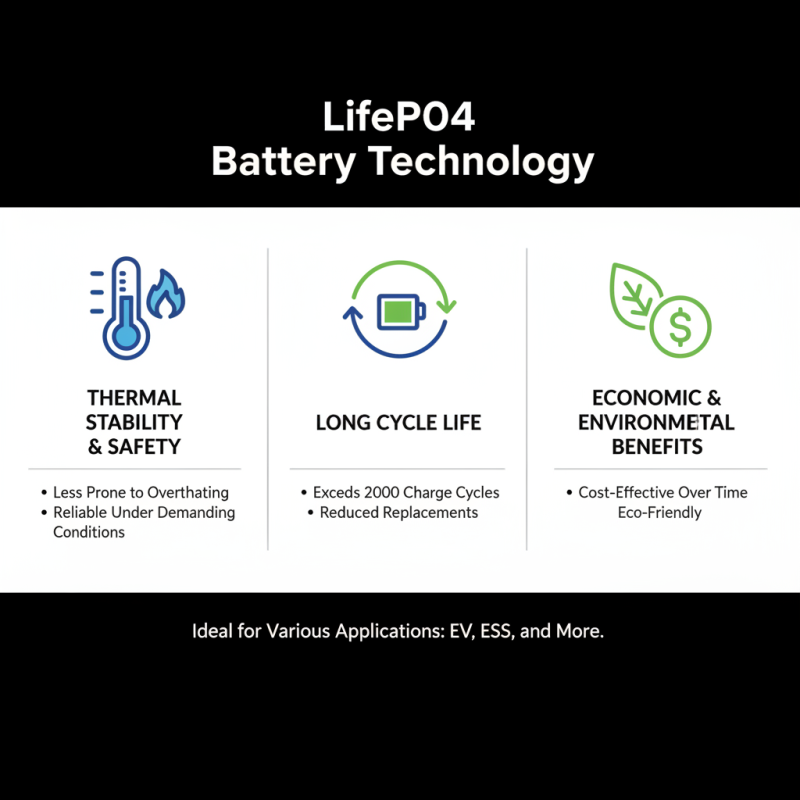
Lithium Iron Phosphate (LiFePO4) battery technology is gaining traction in various applications due to its unique characteristics. This battery type is known for its thermal stability and robust safety profile. Unlike traditional lithium-ion batteries, LiFePO4 cells are less prone to overheating. This feature enhances their reliability in demanding conditions. The long cycle life of these batteries is also impressive, often exceeding 2,000 charge cycles. This longevity reduces the need for frequent replacements, offering both economic and environmental benefits.

Moreover, LiFePO4 batteries boast a higher discharge rate. This makes them suitable for high-power applications, such as electric vehicles and renewable energy systems. While they may have a lower energy density compared to other lithium batteries, their weight-to-power ratio remains favorable. A notable downside, however, is that they can be bulkier. This could limit their use in compact devices. Users need to weigh these trade-offs carefully to make informed choices.

The manufacturing process of Lithium Iron Phosphate batteries is also noteworthy. It is less harmful to the environment compared to other battery chemistries. However, sourcing raw materials responsibly remains a challenge. Addressing this can help create a more sustainable future. Overall, the benefits of LiFePO4 technology are compelling. Yet, potential users must stay aware of its limitations and make choices aligned with their specific needs.

Key Advantages of Lithium Iron Phosphate in Energy Storage

Lithium Iron Phosphate (LiFePO4) batteries are gaining traction in the energy storage sector. Their thermal stability is one of the key advantages. This characteristic reduces the risk of overheating, making them safer than some alternatives. Additionally, they deliver high current output, which is ideal for applications requiring quick bursts of energy. The lifespan of these batteries is remarkable, often lasting over 2,000 charge cycles.

Efficiency in energy delivery is another compelling benefit. LiFePO4 batteries maintain a consistent discharge rate, ensuring that devices receive the power they need without significant drop-offs. This reliability is crucial for renewable energy systems, where consistent performance is essential. Moreover, they exhibit excellent charge retention, which minimizes energy loss over time. Cost-effectiveness also deserves attention. While initial costs may be higher, the longevity and reduced maintenance translate to long-term savings.

However, these batteries are not without drawbacks. Their energy density is lower compared to some similar technologies. This factor makes them bulkier for high-capacity applications. Furthermore, the market's focus on newer battery chemistries can overshadow established options like LiFePO4. Continuous innovation and adjustments in technology may influence their adoption. Addressing these challenges could enhance their standing in energy storage solutions.

Safety Features of Lithium Iron Phosphate Batteries

Top 10 Benefits of Lithium Iron Phosphate Battery Technology?

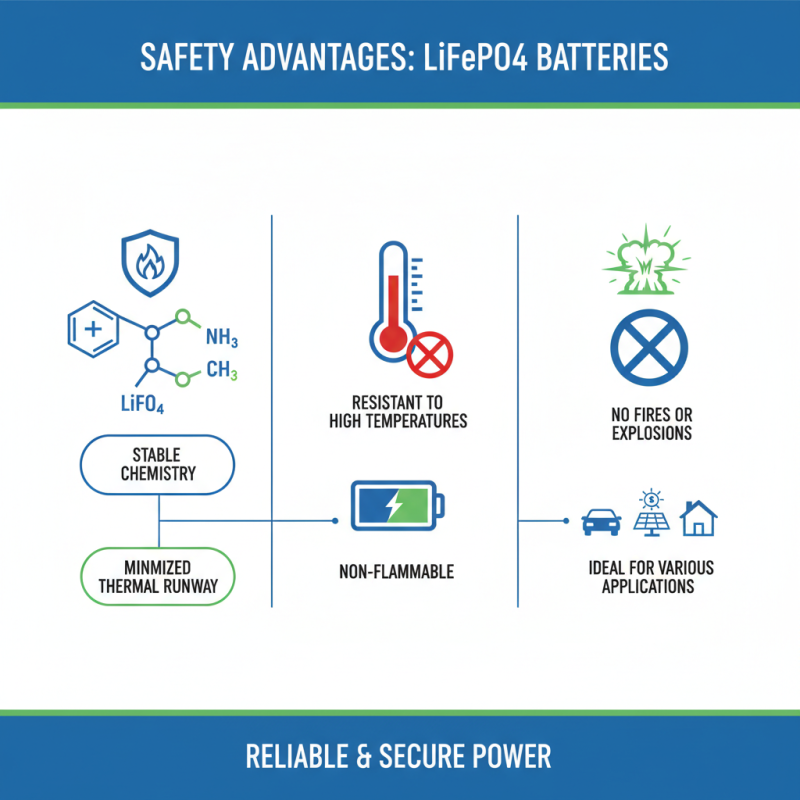
Lithium iron phosphate (LiFePO4) batteries are known for their impressive safety features. Unlike other lithium-ion batteries, they have a stable chemistry. This stability minimizes the risk of thermal runaway. Thermal runaway can lead to fires or explosions. LiFePO4 batteries do not easily catch fire, even under high temperatures. This characteristic makes them ideal for various applications.

Another significant safety aspect is their tolerance to overcharging. Other battery types risk damage or hazards from excessive voltage. In contrast, LiFePO4 batteries can safely handle overcharging scenarios. This resilience reduces the need for complex charge management systems. Users can rely on them for long-term use with fewer safety concerns.

However, like any technology, there are potential shortcomings. While LiFePO4 batteries have longer lifespans, they may not perform well in extreme conditions. In very cold environments, their efficiency decreases. It's essential to consider these factors when choosing batteries for specific applications. Balancing benefits and limitations is crucial for optimal safety and performance.

Environmental Impact of Lithium Iron Phosphate Technology

Lithium iron phosphate (LiFePO4) batteries showcase significant environmental advantages. These batteries have a lower carbon footprint compared to conventional lithium-ion batteries. They produce fewer greenhouse gases during manufacturing. This helps in tackling climate change, a pressing global issue. The materials used in LiFePO4 are non-toxic, posing minimal risks to ecosystems. Their safe disposal also reduces waste, thus supporting sustainability.

In addition, LiFePO4 batteries exhibit longer lifespans. This means fewer batteries are needed over time, resulting in less resource extraction and waste generation. Furthermore, their robust performance reduces the likelihood of battery failures, which can be harmful to the environment. However, sourcing lithium and phosphate remains a challenge, as mining practices can sometimes cause ecological disruption. This factor needs careful consideration in the push for greener technologies. It raises critical questions about how to balance energy needs with environmental protection.

Top 10 Benefits of Lithium Iron Phosphate Battery Technology

Benefit Description Environmental Impact
Safety Lower risk of thermal runaway and fires compared to other lithium batteries. Reduced chance of hazardous battery failures.
Long Cycle Life Can last up to 2000 charge cycles. Reduced electronic waste due to longer battery lifespan.
Thermal Stability Stable under high temperatures, improving overall efficiency. Lower energy loss and emissions during operation.
High Discharge Rates Provides high current output, suitable for power-hungry applications. More efficient energy use reduces overall environmental impact.
Low Toxicity Manufactured without harmful heavy metals. Less environmental pollution during production and disposal.
Cost-Effectiveness Lower operational costs due to longer lifespan and efficiency. Economic benefits contribute to sustainable energy use.
Wide Temperature Range Operates effectively in extreme temperatures. Versatility reduces the need for additional energy sources.
Recyclability Easily recyclable materials used in construction. Fosters a circular economy and reduces landfill waste.
Consistency Stable performance over time without significant degradation. Predictable energy output supports long-term sustainability.
Scalability Adaptable for various applications from small devices to large vehicles. Facilitates transition to renewable energy systems.

Applications and Future Potential of Lithium Iron Phosphate Batteries

Lithium Iron Phosphate (LiFePO4) batteries are increasingly vital in various applications today. Their safety and thermal stability make them ideal for electric vehicles (EVs) and renewable energy systems. These batteries perform well in high-temperature environments. They can withstand more charge cycles compared to traditional lithium-ion batteries. This durability contributes to their long lifespan, reducing the need for frequent replacements.

In energy storage, LiFePO4 batteries excel in solar power systems. They can store energy generated during the day for use at night. Additionally, they are suitable for industrial applications. Their reliability in powering machinery ensures operational efficiency. However, challenges remain. Their energy density is lower than other lithium-ion batteries. This limitation affects their use in some applications where space is a concern.

The future potential of LiFePO4 batteries lies in ongoing research. Developing advanced materials can enhance their performance. Emerging technologies may increase energy density while maintaining safety. This progress could lead to broader adoption in consumer electronics and smart grids, expanding their impact on the energy landscape. As the world shifts towards greener solutions, LiFePO4 technology will likely play a crucial role in powering our future, even as challenges persist.

Top 10 Benefits of Lithium Iron Phosphate Battery Technology