What Is a 12V 12Ah Battery and How Does It Work?
A 12v 12ah Battery is a compact energy source rated at 12 volts and 12 ampere-hours. Its theoretical capacity is about 144 watt-hours, calculated by multiplying voltage by ampere-hours. That figure looks simple, but real performance depends on chemistry, temperature, discharge rate, and battery age. Lead-acid models often weigh several kilograms, while lithium versions may feel surprisingly light. Both can carry the same label, yet they behave differently.
Battery University founder Isidor Buchmann explains, “A battery is a chemical reactor that converts energy from one form to another.” This principle becomes practical inside every 12v 12ah Battery. During discharge, chemical reactions release electrons through the external circuit. The connected device receives usable electrical power. During charging, an appropriate charger drives the reaction in reverse. Carefully.
This guide examines internal construction, capacity ratings, charging methods, safety limits, and common applications. It also compares lead-acid and lithium technologies, including their different voltage ranges and maintenance needs. A 12v 12ah Battery may power an alarm system, mobility device, backup lamp, small solar setup, or portable instrument. However, the stated 12Ah rating is not a promise under every condition. Manufacturer testing usually follows a specific discharge rate. Faster loads can reduce available capacity, especially in lead-acid batteries. That detail is easy to miss. Real results vary. Careful selection matters more than the label alone.
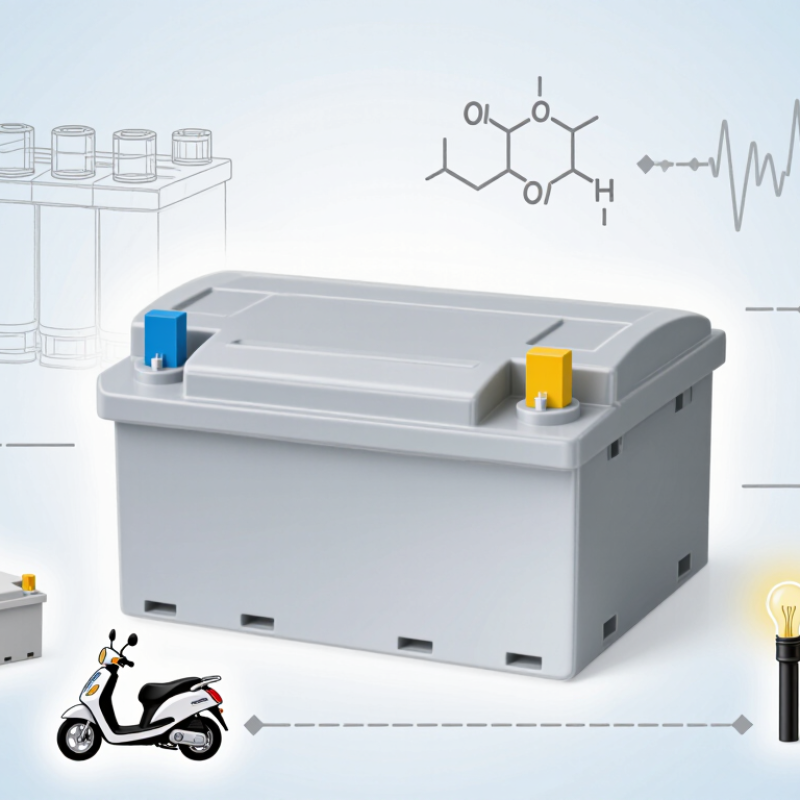
12V 12Ah Battery: Definition and Core Specifications
A 12V 12Ah battery is a rechargeable energy-storage unit with a nominal voltage of 12 volts. “Nominal” matters because its actual voltage changes during charging and use. A fully charged battery may measure above 12 volts, while its voltage falls as energy is released. The 12Ah rating means it can theoretically supply 12 amps for one hour, or 1 amp for twelve hours. Real performance is less exact.
The estimated energy capacity is 144 watt-hours, calculated by multiplying 12 volts by 12 amp-hours. This figure helps when matching the battery with lights, sensors, backup equipment, or small motors. For example, a 24-watt device might run for roughly five hours under ideal conditions. In practice, temperature, battery age, discharge rate, and wiring losses reduce runtime. Labels can make this look easier than it is.
Battery chemistry also changes the core specifications. Lead-acid versions are often heavier and may need ventilation, while lithium-based versions usually offer lower weight and steadier voltage. Each type requires a compatible charger and suitable protection. Never judge capacity from voltage alone. Measure the load when possible, and check the manufacturer’s test conditions before planning runtime. My practical mistake was treating 12Ah as guaranteed usable energy; it is a reference rating, not a promise.
Internal Components and Basic Operating Principles
What Is a 12V 12Ah Battery and How Does It Work?
A 12V 12Ah battery stores electrical energy for small backup systems, lights, instruments, and mobility equipment. Its 12-volt rating describes nominal voltage, not a constant reading. The 12Ah figure means it can theoretically supply 12 amps for one hour under specified test conditions. Real performance changes with temperature, discharge rate, age, and battery chemistry. Its approximate nominal energy is 144 watt-hours, calculated by multiplying voltage by ampere-hours.
Inside, construction depends on the battery type. A lead-acid model contains positive and negative plates, electrolyte, separators, terminals, and a sealed or vented case. A lithium-based model uses several cells, current collectors, electrolyte, and often a battery management system. Separators prevent direct contact while allowing ions to move. During discharge, chemical reactions push electrons through the external circuit. The load uses this electron flow. Ions move inside the battery to maintain electrical balance. Charging reverses much of this process. The explanation is simple, but internal reactions are not perfectly reversible, so capacity gradually declines.
Tips: Check the battery chemistry before choosing a charger. Match the charger’s voltage and charging profile. Keep terminals clean and connections tight. Avoid deep discharge when the manufacturer warns against it. Measure voltage after resting, because a fresh charging surface can give a misleading reading. I have found that rated capacity is easy to overtrust; actual runtime should be verified under the intended load. Temperature matters more than many users expect. A cold battery may appear healthy but deliver noticeably less power.
Common Battery Chemistries and Their Key Differences
A 12V 12Ah battery can deliver approximately 12 ampere-hours before reaching its rated discharge limit. In simple terms, it may supply 1 ampere for about 12 hours, although real performance varies with temperature, age, and load. The 12-volt label describes nominal voltage, not a constant reading. A fully charged battery may measure higher.
Lead-acid batteries remain common because they are affordable, stable, and easy to source. They tolerate short bursts of high current, but they are heavy and should not be deeply discharged repeatedly. Sealed versions reduce maintenance, although “maintenance-free” does not mean misuse-proof. Heat still accelerates aging.
Lithium iron phosphate batteries usually provide lower weight, longer cycle life, and steadier voltage during discharge. They require suitable charging control and protection electronics. Their higher purchase cost can be reasonable when frequent cycling matters. Nickel-based chemistries can offer strong power performance, but they may lose charge during storage and need careful charging. Chemistry changes the battery’s weight, safety requirements, usable capacity, and service life. Capacity figures are not perfectly comparable. I have seen identical ratings perform differently under motor loads, especially in cold conditions. That detail is easy to overlook. Check the equipment’s voltage range, charging method, expected current, and installation space before choosing a 12V 12Ah battery.
Typical Applications, Charging, and Maintenance Requirements
What Is a 12V 12Ah Battery and How Does It Work?
A 12V 12Ah battery stores about 144 watt-hours under ideal conditions. Its practical output is usually lower. The 12Ah rating commonly uses a 20-hour discharge test. Faster discharge can reduce available capacity. Lead-acid versions contain six cells, each producing roughly 2 volts. Lithium versions use different cell chemistry and require dedicated protection circuits. The label is not the whole truth.
Typical applications include alarm panels, emergency lighting, access-control systems, small backup power units, and portable medical equipment. A 12V 12Ah unit may run a 24-watt load for nearly five hours theoretically. Real runtime depends on temperature, battery age, wiring loss, and discharge limits. The U.S. Energy Information Administration reports that batteries support reliability in distributed energy systems, but small batteries still need correct sizing. A common mistake is choosing capacity from voltage alone.
Charging requirements depend on chemistry and design. Sealed lead-acid batteries often use constant-voltage charging, with many models specifying approximately 14.4–14.7V during cycling and 13.5–13.8V during standby. Always verify the data sheet. IEEE 1188 recommends scheduled inspection for valve-regulated lead-acid batteries. Check swelling, leakage, terminal corrosion, and resting voltage. Keep vents clear. Avoid deep discharge. Battery Council International reports a lead-battery recycling rate near 99% in the United States, supporting controlled end-of-life collection. Maintenance is simple, but not effortless.









 Tina - International Sales Director