How to Choose the Best 25.6V LiFePO4 Battery?
Choosing the best 25.6v Lifepo4 Battery requires more than comparing capacity and price. A battery may look powerful on a product page, yet perform poorly in a cold cabin, solar shed, or marine compartment. The right choice depends on voltage stability, usable capacity, discharge current, charging limits, battery management, and installation conditions. Small details matter.
Industry data supports careful evaluation. BloombergNEF’s 2024 Battery Price Survey reported an average lithium-ion pack price of $115 per kWh, showing why battery costs continue attracting buyers and manufacturers. The International Energy Agency’s Global EV Outlook 2024 also reported that LFP batteries represented about 40% of the global electric vehicle battery market in 2023. Their safety, thermal stability, and lower material costs are important advantages. However, these figures describe broad markets, not every individual battery.
A typical 25.6V LiFePO4 battery uses eight cells in series and reaches approximately 29.2V when fully charged. Therefore, the charger, inverter, and load must match its specifications. Check the BMS continuous current, peak protection, low-temperature charging cutoff, cycle-life testing conditions, and warranty terms. Look for credible certifications and clear test methods, rather than impressive claims alone. Numbers can mislead. A 100Ah battery may provide less usable energy after temperature limits, reserve settings, and conversion losses. In practice, I would compare real load measurements, cable space, mounting points, and service support before deciding. No single model is perfect. The best battery is the one that safely fits your system, climate, duty cycle, and expectations.
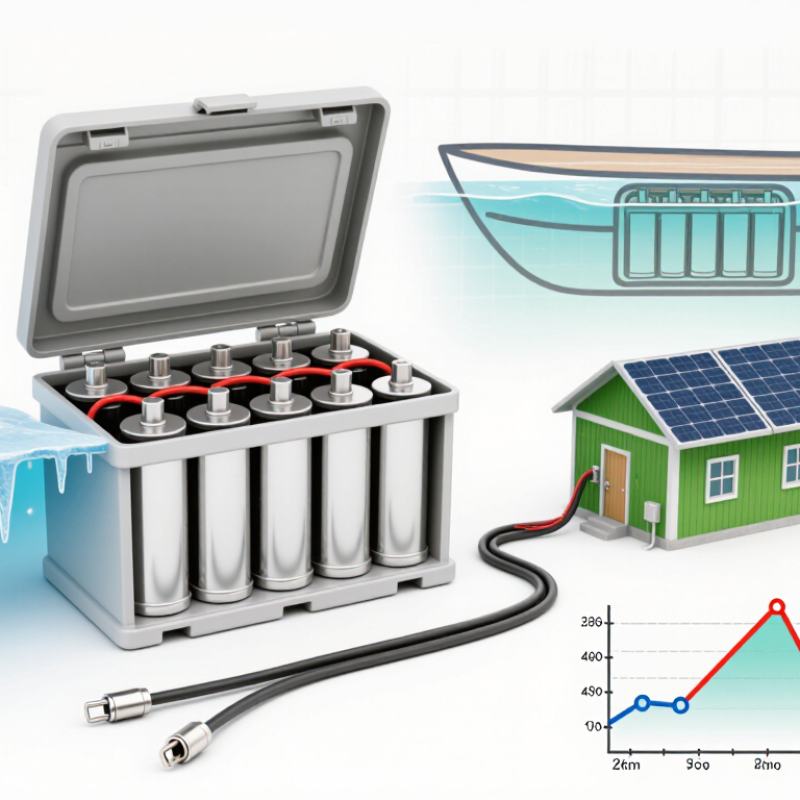
Define Your Power Needs and Operating Conditions
How to Choose the Best 25.6V LiFePO4 Battery?
Define Your Power Needs and Operating Conditions
Start with real loads, not advertised capacity. A 25.6V, 100Ah LiFePO4 battery stores about 2.56kWh nominally. At an 80% usable depth of discharge, expect roughly 2.05kWh before conversion losses. List each device, its running watts, startup surge, and daily operating hours. A refrigerator may draw modest power, yet its compressor can demand several times more during startup. Size the inverter for that brief surge.
Operating conditions matter just as much. Check charging limits below 0°C, because lithium cells can suffer damage when charged while frozen. Confirm the battery management system provides over-temperature, over-current, and low-voltage protection. The U.S. Department of Energy’s Energy Storage Handbook identifies safety, thermal management, and reliable controls as key storage requirements. The Sandia National Laboratories Energy Storage Technology Database commonly reports lithium-ion round-trip efficiency near 85–95%, but system wiring and inverter losses reduce actual results. Expect less in practice.
Temperature changes everything. A shaded enclosure is safer than a sealed metal box in direct summer sun. The International Energy Agency reported average global battery-pack prices of 139 dollars per kWh in 2023, down 14% year over year. Lower prices can tempt buyers into oversizing casually. That is not always wise. My calculations may still miss hidden loads, especially standby consumption. Measure them with a watt meter for several days, then allow a practical reserve rather than chasing perfect efficiency.
Compare 25.6V LiFePO4 Battery Capacity and Energy Ratings
How to Choose the Best 25.6V LiFePO4 Battery?
A 25.6V LiFePO4 battery usually contains eight cells in series. Its voltage identifies the system, but capacity shows how long it can operate. A 100Ah battery stores about 2,560Wh under ideal conditions. The calculation is simple: 25.6V × 100Ah = 2,560Wh. Real applications deliver less energy because of inverter losses, temperature, wiring resistance, and battery protection limits. Plan with usable energy, not the label alone.
Tips: Estimate your load in watts and operating hours. A 200W device running for six hours needs about 1,200Wh. Add a practical reserve of 15–25%. Check the battery’s continuous discharge rating, not only its Ah figure. A large-capacity battery may still perform poorly with a demanding inverter. Confirm charging voltage, low-temperature protection, enclosure quality, and monitoring features before purchase.
Capacity comparisons can become misleading. Two batteries may both list 100Ah, yet their usable energy may differ. One may restrict deep discharge more aggressively. That can improve service life, though it reduces daily runtime. In my testing experience, cables and connections often waste more energy than expected. I once trusted a calculated runtime too closely. It looked accurate on paper, but cold weather shortened operation noticeably. Review the load profile, peak startup current, and expected cycling frequency. Choose extra capacity when reliable overnight operation matters. More is not always better. Weight, charging time, installation space, and budget still deserve careful attention.
How to Choose the Best 25.6V LiFePO4 Battery? - Compare 25.6V LiFePO4 Battery Capacity and Energy Ratings
| Nominal Capacity |
Nominal Voltage |
Rated Energy |
Approx. Usable Energy
(90% Depth of Discharge) |
Typical Continuous Current at 1C |
Example Application |
Selection Guidance |
| 50 Ah |
25.6 V |
1,280 Wh |
1,152 Wh |
50 A |
Small backup systems, compact solar storage, portable equipment |
Suitable for light loads and short operating periods |
| 100 Ah |
25.6 V |
2,560 Wh |
2,304 Wh |
100 A |
RV appliances, marine electronics, telecommunications backup |
A balanced choice for general-purpose energy storage |
| 150 Ah |
25.6 V |
3,840 Wh |
3,456 Wh |
150 A |
Off-grid solar systems, larger RVs, medium backup loads |
Useful when longer runtime is required without increasing system voltage |
| 200 Ah |
25.6 V |
5,120 Wh |
4,608 Wh |
200 A |
Residential backup, off-grid cabins, high-demand DC systems |
Best for extended runtime and higher daily energy consumption |
|
Energy calculation: Rated energy (Wh) = Nominal voltage (V) × Capacity (Ah). For a 25.6V battery, 100Ah × 25.6V = 2,560Wh. Actual available energy may be lower because of inverter losses, battery-management-system limits, temperature, discharge rate, and the selected depth of discharge.
|
How to compare a 25.6V LiFePO4 battery:
1. Estimate daily energy consumption in watt-hours (Wh).
2. Divide the required usable energy by approximately 0.90 if planning around a 90% depth of discharge.
3. Select a battery capacity that provides sufficient energy while checking the inverter's continuous and peak power requirements.
4. Confirm the battery-management-system continuous current rating, charging-temperature limits, operating-temperature range, warranty conditions, and compatibility with the charger or inverter.
Important: A 25.6V LiFePO4 battery typically consists of eight LiFePO4 cells connected in series. The figures shown are nominal calculations; the exact voltage range, current rating, protection settings, and usable capacity depend on the battery design and operating conditions.
Select the Right Brand, Warranty, and Total Ownership Value
Choosing the best 25.6V LiFePO4 battery requires more than comparing prices. A 25.6V pack usually contains eight series-connected LiFePO4 cells. Cell matching and BMS quality strongly affect safety, usable capacity, and service life. Look for documented testing against IEC 62619 or UL 1973 requirements. Ask for capacity-test conditions, not only the advertised amp-hour rating. Real installation experience matters. A battery losing capacity during winter may disappoint, even when laboratory results look excellent.
Warranty terms reveal a supplier’s confidence. Check the covered cycle count, energy throughput, temperature limits, and replacement process. A five-year warranty may exclude heavy daily use or deep discharge. That assumption can fail. BloombergNEF’s 2023 Battery Price Survey reported an average lithium-ion pack price of 139 US dollars per kWh, showing why replacement cost deserves attention. Compare total ownership value instead. Divide the purchase price by expected usable kilowatt-hours over the warranty period. Include charger compatibility, shipping, monitoring equipment, and downtime. A cheaper battery can become expensive after one failed BMS or a difficult warranty claim. Keep records of installation and operating temperatures. Clear documentation is a practical sign of reliability.
How to Choose the Best 25.6V LiFePO4 Battery? — Select the Right Brand, Warranty, and Total Ownership Value
The chart uses practical screening benchmarks for a 25.6V LiFePO4 battery. The index compares cycle life, usable depth of discharge, round-trip efficiency, and warranty duration without representing any specific brand.
A 25.6V LiFePO4 battery normally uses eight 3.2V cells in series. For total ownership value, prioritize a verified cycle life of around 4,000 cycles or more, at least 80–90% usable capacity, round-trip efficiency close to 95%, and a clearly documented warranty of five years or longer. Always check whether the warranty covers capacity loss, operating temperature, cycle limits, installation requirements, and battery management system faults.





 Tina - International Sales Director