Leave Your Message

China Best 25.6V LiFePO4 Battery for Solar Systems

A 25.6V LiFePO4 Battery can be a practical choice for solar storage when the system is designed around its electrical limits. Its nominal voltage usually reflects eight lithium iron phosphate cells connected in series. That number alone does not confirm compatibility. Check the battery’s usable capacity, continuous charge and discharge current, BMS specifications, and permitted voltage range. Then compare them with the inverter and solar charge controller manuals. A mismatch may cause poor charging, unexpected shutdowns, or reduced performance.

Battery scientist Dr. Jeff Dahn’s research focuses on lithium-ion battery performance and longevity. A careful paraphrase of a principle relevant to his work is: “Long-term reliability matters as much as rated capacity.” This is a paraphrase, not a direct quotation. For solar buyers, it points toward details that product listings can underplay: cycle-life test conditions, operating temperature, warranty terms, and whether monitoring data is available. A neat capacity figure is not the whole story.

This guide examines how to assess China’s best 25.6V LiFePO4 Battery options for solar systems, including safety features, specifications, and installation considerations. Look for clear documentation and credible test information, not just confident marketing language. Also consider the real installation: cable length, ventilation, mounting space, and the loads you expect overnight. Even a well-made battery can disappoint when paired poorly. Some specifications are easy to compare; others need closer scrutiny, and that uncertainty deserves attention.
China Best 25.6V LiFePO4 Battery for Solar Systems

What a 25.6V LiFePO4 Battery Is

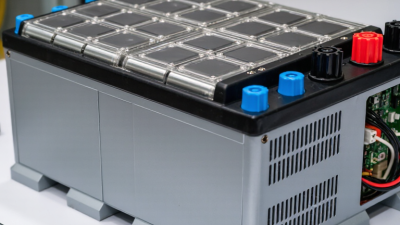
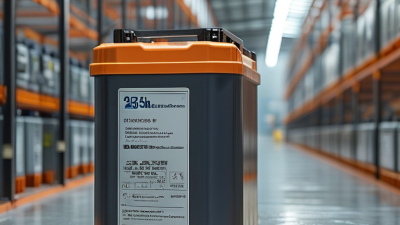
A 25.6V LiFePO4 battery is a rechargeable lithium iron phosphate battery with eight cells connected in series. Each cell has a nominal voltage of about 3.2V, giving the pack its 25.6V rating. It is not a 24V lead-acid battery, even if both may serve similar system voltages. The chemistry is valued for stable operation and long cycle life when operated within specified limits. A label alone is not enough.

Inside the battery, a battery management system monitors cell voltage, current, and temperature. It can help prevent unsafe charging or discharging and balance the cells.

For a solar setup, the charge controller must support the battery’s chemistry and follow its specified charging settings; the correct full-charge voltage depends on the battery design. Check the manual.

A 100Ah pack stores about 2,560Wh at nominal voltage, but the energy available to appliances can be lower because of operating limits and conversion losses. Still, the voltage number can mislead: wiring, inverter compatibility, temperature, and actual daily loads matter too.

A compact battery beside an inverter may look simple, yet a poorly matched controller can shorten its service life. Verify the specifications before installation.
How It Stores and Supplies Solar Energy

China Best 25.6V LiFePO4 Battery for Solar Systems

How It Stores and Supplies Solar Energy

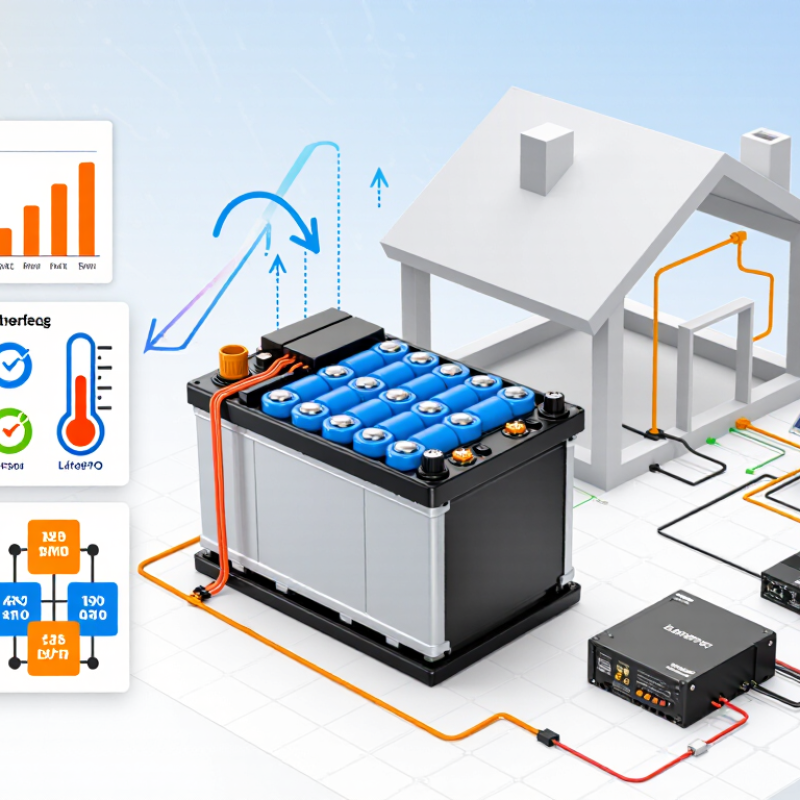
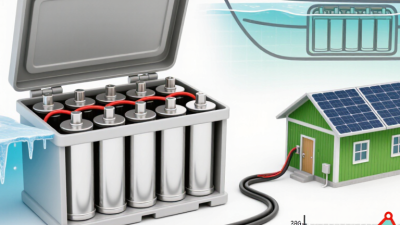
A 25.6V LiFePO4 battery typically uses eight cells connected in series, each rated near 3.2V nominal. It stores surplus solar electricity as chemical energy during the day. A solar charge controller regulates the incoming power and protects the battery from unsuitable charging conditions. When sunlight fades, stored energy flows as direct current to an inverter, which converts it for household appliances. A 100Ah battery holds about 2.56kWh nominally; usable energy is lower after operating limits and conversion losses. The IEA’s 2024 Batteries and Secure Energy Transitions report gives lithium-ion round-trip efficiency broadly around 85–95%, with actual results depending on system design and use. Real output is less tidy than the label suggests.

Tips: Match the controller and inverter to the battery’s voltage and current limits. Check the battery’s permitted charge temperature, too.

For a practical setup, compare daily appliance use with expected solar production, not just battery voltage. A refrigerator may run overnight, while a kettle draws a large load for only minutes. This difference affects inverter sizing and reserve capacity. Keep the battery in a dry, ventilated location, and monitor its state of charge through the manufacturer’s specified method. Even good estimates can miss cloudy days or seasonal changes, so leave a sensible energy buffer.

Key Specifications for Solar System Compatibility

China Best 25.6V LiFePO4 Battery for Solar Systems

Key Specifications for Solar System Compatibility

A 25.6V LiFePO4 battery is typically an eight-cell pack with a nominal voltage of 25.6 volts. Its usable energy depends on capacity: a 100Ah model stores about 2.56kWh nominally. Check your inverter’s DC input range before choosing a battery. Many systems need a higher charging voltage, often near 29.2 volts, but the battery maker’s limits take priority. A small mismatch can prevent full charging or trigger an inverter shutdown.

Match the solar charge controller to LiFePO4 charging requirements. It should allow suitable voltage settings and a charge current within the battery’s stated limit. Check the battery management system’s continuous and peak discharge ratings against the inverter’s demand, including brief startup surges. Do not size from watt-hours alone. Cables, connectors, and a correctly rated fuse matter too; warm terminals are a warning, not a minor detail.

Temperature limits and connection rules deserve equal attention. Some batteries restrict charging below freezing, so confirm the specified range and use any required protection. If connecting batteries in parallel, verify that the manufacturer permits it and requires matching voltage, capacity, and age. I would not assume two similar-looking packs behave alike. That detail is easy to overlook. Record the controller settings and check them after installation; real systems can need adjustment.

How to Assess Chinese Battery Manufacturers

A 25.6V LiFePO4 battery can suit a solar system, but the label alone proves little. Assess the manufacturer’s process, test records, and technical support. Ask for evidence. Request cell specifications, capacity test conditions, and the battery management system’s voltage and current limits. These details should match your inverter’s charging settings and expected loads.

Look for traceability from incoming cells to the finished pack. A reliable factory should explain how it checks welds, insulation, and pack voltage, and should share sample test reports. Ask whether low-temperature charging is blocked, if your system may operate in cold conditions. Check warranty terms and response procedures in writing. Clear answers matter.

A factory tour or live video inspection can reveal orderly workstations, calibrated meters, and labeled test areas. Still, a clean room is not proof of long-term reliability. Request a sample unit and verify its capacity and protections under realistic conditions, ideally with an independent technician. Compare promised cycle life with the stated test temperature, depth of discharge, and remaining-capacity threshold. The fine print matters. I would not choose on price alone; yet documents can also look reassuring while real support feels slow. Test communication before placing a large order, and note how quickly technical questions receive specific answers.

China Best 25.6V LiFePO4 Battery for Solar Systems - How to Assess Chinese Battery Manufacturers

Assessment Dimension What to Check Useful Technical Reference Evidence to Request
Cell chemistry and pack configuration Confirm the battery uses lithium iron phosphate (LiFePO4) cells and check the cell count and pack design. A 25.6 V nominal LiFePO4 pack commonly uses eight cells in series. Cell configuration and cell specifications should be stated clearly. Cell datasheet, pack specification, and a wiring or block diagram showing the series and parallel configuration.
Nominal and charging voltage Check that the battery voltage is compatible with the solar charge controller and inverter settings. For an eight-cell series pack, 25.6 V nominal corresponds to 3.2 V per cell. A 29.2 V charge limit corresponds to 3.65 V per cell; follow the battery maker’s specified limits and charging profile. Datasheet listing nominal voltage, recommended charging voltage, maximum voltage, and low-voltage protection settings.
Rated capacity and energy Compare stated amp-hour capacity with watt-hour energy, and confirm the test conditions behind the rating. Nominal energy can be estimated as nominal voltage × rated capacity. For example, 25.6 V × 100 Ah = 2,560 Wh nominal energy; usable energy depends on operating limits and system conditions. Capacity test report stating temperature, discharge rate, end voltage, sample count, and measured results.
Continuous and peak current Match discharge and charge current limits to the inverter, loads, and solar charger. Distinguish continuous ratings from short-duration peaks. Current limits depend on the cells, busbars, wiring, connectors, BMS, and thermal design. A peak-current figure should include its permitted duration. BMS specification, current-versus-time limits, protection thresholds, and test results under representative load conditions.
Battery management system (BMS) Check for cell-level overvoltage and undervoltage protection, overcurrent protection, temperature monitoring, and balancing. Protection settings should stay within the cell maker’s operating limits. Confirm whether balancing is passive or active and whether monitoring is available. BMS datasheet, protection-setting table, balancing details, communication protocol documentation, and fault-test records.
Cycle-life claim Review the stated cycle count together with the depth of discharge, temperature, charge/discharge rate, and end-of-life definition. Cycle-life figures are meaningful only when their test conditions are disclosed. They are not a guaranteed service life under every installation or operating pattern. Cycle-life test report identifying the test profile, temperature, depth of discharge, sample count, and remaining-capacity threshold.
Temperature limits Verify specified charging, discharging, and storage temperature ranges, plus any low-temperature charging protection. Allowable ranges vary by cell and pack design. Charging below the cell maker’s permitted temperature can damage lithium-ion cells; check for a documented cutoff or heating function where needed. Datasheet temperature limits, BMS temperature protection settings, and cold- and hot-condition test records.
Solar-system compatibility Confirm compatibility with the intended inverter or charge controller, including voltage limits, current limits, and communications. CAN or RS-485 availability alone does not guarantee compatibility. The communication protocol, pinout, settings, and supported equipment should be confirmed. Compatibility list or protocol document, connection diagram, and a commissioning procedure for the intended system.
Safety and transport documentation Check that documents apply to the exact battery model and configuration being purchased. UN 38.3 relates to transport testing of lithium batteries. IEC 62619 covers safety requirements for secondary lithium cells and batteries used in industrial applications; applicability should be checked for the product and market. UN 38.3 test summary and relevant test reports or certificates, with model identification matching the quotation and product label.
Manufacturing quality controls Assess incoming-cell inspection, traceability, assembly controls, end-of-line testing, and handling of nonconforming products. A quality-management certificate describes a management system; it does not by itself prove a battery’s performance or safety. Quality-system certificate with scope and validity, sample inspection records, serial-number traceability, and end-of-line test procedures.
Mechanical design and installation Check enclosure material, terminal type, mounting method, ingress-protection rating, and required installation clearances. Ingress protection is meaningful only when tested and documented for the complete enclosure. Installation requirements depend on the product design and local electrical rules. Dimensioned drawings, enclosure-rating evidence, terminal torque specifications, installation manual, and mounting instructions.
Warranty and after-sales support Review coverage period, capacity or energy-retention conditions, exclusions, claim process, and available technical support. Warranty terms should be checked against the intended operating conditions and installation location; marketing statements alone are not a substitute for the written warranty. Written warranty, service process, spare-parts policy, and named technical contact or support channel.
Supplier verification and sample evaluation Verify the legal entity, factory address, product scope, and consistency between samples, documents, and production units. Independent inspection and testing can help confirm product identity and conformance before a large order. Business and factory documentation, pre-shipment inspection plan, retained sample details, and agreed acceptance criteria.

Note: This is a general evaluation checklist, not a ranking or certification of any manufacturer. Confirm all specifications, standards, and regulatory requirements for the exact battery model, destination market, and system design.

Installation, Safety, and Maintenance Practices

A 25.6V LiFePO4 battery needs a compatible charger and solar charge controller. Check the battery manual for its voltage limits, current rating, and approved wiring arrangements. Turn off the relevant equipment before connecting cables, and confirm polarity before tightening terminals. A reversed connection can damage equipment quickly. Use cable sized for the expected current, secure it against movement, and fit protective devices as specified by the system designer.

Keep the battery dry, shaded, and within its stated operating temperature range. Leave room to inspect connections and follow the manufacturer’s clearance instructions. Small details matter. One commonly missed step is checking terminal torque; use the specified value rather than guessing. Do not open the battery case or connect multiple batteries in series or parallel unless the documentation permits it. During routine checks, look for loose cables, corrosion, unusual warmth, or physical damage. If anything seems abnormal, stop using the system and seek qualified help.

For maintenance, review charge data periodically and keep a simple record of unusual readings. Clean the exterior with a dry cloth, not a wet spray. Avoid storing the battery fully discharged, and follow its instructions for long-term storage and periodic checks. Solar output changes with weather, so a single low-charge day may not signal a fault. Still, I would not ignore a repeated pattern; monitoring helps distinguish normal variation from a setup problem.

China Best 25.6V LiFePO4 Battery for Solar Systems: Installation, Safety, and Maintenance Practices

An eight-cell LiFePO4 pack has a nominal voltage of 25.6 V (8 × 3.2 V per cell). Typical charging references are 28.0–29.2 V (3.5–3.65 V per cell), but the correct settings depend on the battery and its BMS. During installation, verify charger compatibility and polarity, and use appropriately rated wiring and overcurrent protection. Follow the battery manual for operating limits and maintenance.